via IFTTT
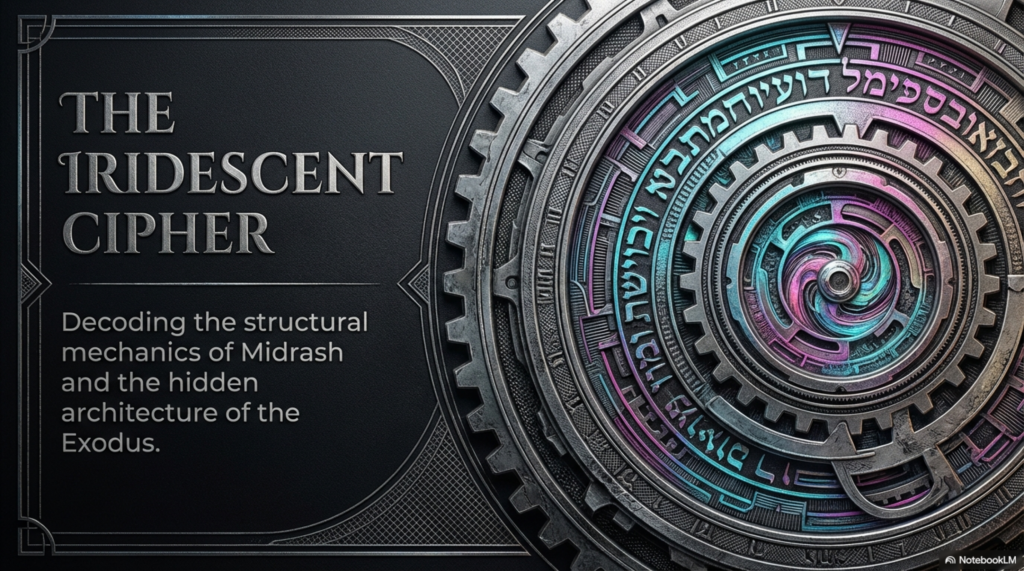
The Torah’s Hidden Code: Why the Haggadah’s “Grammar Mistakes” Are Actually Its Deepest Secrets
1. Introduction: The Mystery Behind the Seder Table
Have you ever wondered why, on the night dedicated to the sweeping narrative of the Exodus, the Haggadah directs us to a seemingly dry liturgical recap from the book of Deuteronomy? Year after year, we analyze the Bikkurim (First Fruits) declaration found in Deuteronomy 26:5–8. One might expect a reading from the Book of Exodus itself, yet the Seder is not designed for mere recitation; it is designed for darshing—the rigorous Midrashic interpretation and investigation of the text.
The Midrash serves as the “inside story” of the Torah. It operates on the premise that the written text is a condensed, coded document. By applying the hermeneutical traditions received at Sinai, the scholar uncovers the spiritual architecture hidden beneath the surface of the verse. To understand the Seder is to understand that the Midrash is not an external commentary, but the revelation of a “Divine Matrix” inherent in the words themselves.
2. The Divine Matrix: When a Mistake Isn’t a Mistake
In the study of the Torah Matrix, we recognize that the written Law is intentionally concise, peppered with deliberate redundancies, unusual word choices, and what a casual reader might term “grammatical mistakes.” To the literary analyst of the Torah, these are not errors; they are essential textual markers—markers that signal a deeper, Oral tradition waiting to be decoded.
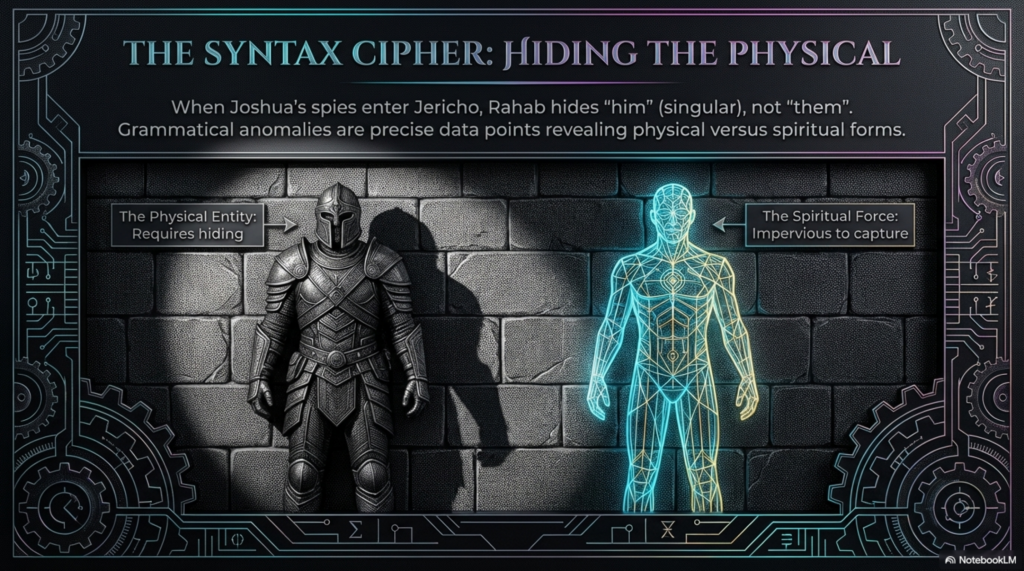
A quintessential example of this “smoking gun” methodology is found in Joshua 2. When the spies—identified by tradition as Caleb and Phinehas—arrive in Jericho, Rahab hides them. However, the Hebrew text employs a startling singular suffix: vatitzpeno (“she hid him“) rather than the expected plural vatitzpenem (“she hid them“).
This textual anomaly is the key to the scene’s spiritual mechanics. Caleb represented the mundane world of the spy, requiring physical concealment. Phinehas, however, represented a spiritual reality; he is associated with the eternal presence of Elijah and required no earthly hiding place. The “mistake” in the text forces the reader to confront the distinction between the physical and spiritual dimensions of the mission.
“The Midrashic methodology uncovers the inherent architecture of the verse, revealing what is hidden behind the scenes. It functions like a Sherlock Holmes mystery; the evidence is right before our eyes, provided we possess the sensors to notice it.”
3. Descent into the Dungeon: Lared and the Architecture of Compulsion
In the Bikkurim declaration, we read that Jacob “went down” to Egypt. The specific Hebrew term used is Lared. While modern Hebrew uses this root to describe any departure from the Land of Israel, its ancient context carries the weight of a legal decree.
In the ancient world, the dungeon (habore) was a pit located beneath the earth. When Joseph was imprisoned, the text specifies he was pulled from the habore—the pit. Consequently, Lared (to go down) is the terminology of the dungeon. This linguistic choice signals that the Israelites did not enter Egypt as voluntary immigrants seeking economic relief. Rather, they were “drafted” or “compelled” by a Divine decree.
Egypt was a spiritual “boot camp.” The nation was legally and structurally forced into a “dungeon” environment where they would be torn down to their very foundations. This descent was a necessary structural prerequisite for building a nation from scratch—a nation that would eventually reject the perversions of human-centric power in favor of a new, monotheistic identity.
4. The “Lagore” Clause: Why the Israelites Refused to Fit In
The declaration further specifies that Jacob went to Egypt Lagore sham—to sojourn there. This choice of Lagore (to live as a resident alien) stands in stark contrast to Lashev (to settle or establish a permanent home).
Despite a residency spanning 210 years—a duration that would normally signify total assimilation—the Torah insists they were merely “sojourning.” This grammatical insistence reveals the intentionality of the Israelite community. They remained “aliens” by design, refusing to be absorbed into the sophisticated but corrupt Egyptian culture. While the famine and the Divine decree placed them in Egypt physically, their refusal to “settle” (lashev) ensured their hearts remained tethered to their true home.
5. From Barren Land to Wildflowers: The Ezekiel Connection
The Haggadah describes the nation’s growth using a triad of terms: Gadol (great), Atzum (mighty), and Rav (populous). In the Torah Matrix, the word Rav triggers a vital cross-reference to the Prophet Ezekiel, specifically Ezekiel 16:6–7.
The Egyptian perspective, as recorded in Exodus 1:7, viewed the Israelites as “swarming” (yishretzu)—a term reserved for insects or pests. However, the Divine Matrix offers a different metaphor through the word Reva: the “wildflower” or “meadow plant.”
- The Blood of the Covenant: Ezekiel 16:6 describes the nation’s growth beginning with the command: “In your blood, live.” This connects the “blooming” of the nation to the blood of the Passover lamb and the Brit Milah. It was through this covenantal blood that the nation survived the “dungeon” of Egypt.
- Independent Flourishing: Like wildflowers in a barren desert, the nation flourished independently of the Egyptian “gardener.” They did not grow through the nurturing of the state; they flourished through Divine providence.
- The Anti-Robot Philosophy: This metaphor highlights the “Anti-Robot” philosophy at the heart of the Exodus. The Egyptian system demanded total subjection to a human king—reducing men to robots of the state. In contrast, the Torah teaches that serving a human makes one a slave, but being a “Slave of Hashem” is the only path to true freedom of the mind.
“To be a servant of the Almighty is to be a truly free person. God does not demand robotic compliance; He demands that you use your mind, learn the guidelines, and then flourish as an independent, intellectual being.”
6. Conclusion: The Goal of the Code
The Midrashic method is more than a scholarly pursuit; it is the ultimate realization of Torah study. By mastering the “codes”—the textual anomalies and redundancies—a person eventually reaches a level of perception where they can see the entire Oral Law contained within the architecture of a single verse. Great luminaries, such as Rav Moshe Feinstein, were said to see the vastness of the Talmud mirrored in every sentence of the Pentateuch.
The “mistakes” in the Haggadah remind us that our own “Egypts”—our struggles and descents—are not random tragedies. When we find ourselves in the “pit,” we must ask: Is this a dungeon of despair, or a Divine boot camp? The Matrix of the Torah assures us that we are not robots of fate, but wildflowers designed to flourish even in the most barren of lands.
About the Author