via IFTTT
Your Body is a Mirror: 5 Surprising Lessons from the “Spiritual Anatomy” of the Soul
Introduction: The Physical-Spiritual Disconnect
We often treat our bodies like high-maintenance rentals rather than the temples they are meant to be. In our modern rush, it is easy to view the physical self as a biological machine—a collection of gears and pulleys to be fueled, fixed, and occasionally pushed to its limits. We relegate “spirituality” to the ethereal clouds of the mind, leaving a profound, aching disconnect between our skin and our soul.
But what if your anatomy isn’t just a container for your life, but a map of your internal world?
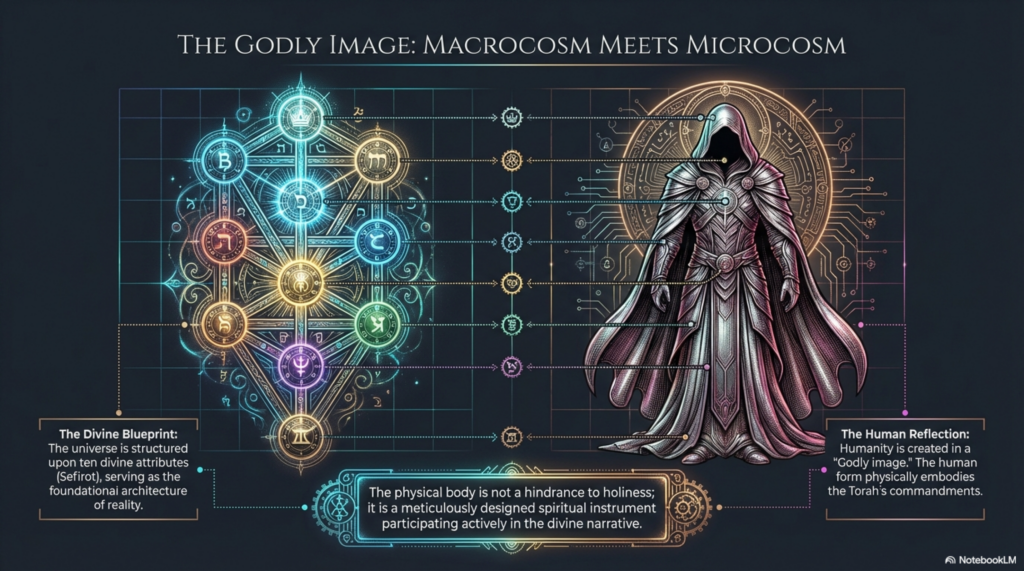
In the Kabbalistic tradition—specifically through the lens of Chaim Kramer’s Anatomy of the Soul and the profound insights of Rebbe Nachman of Breslov—the human form is the “Godly image.” It is a physical manifestation of divine attributes, a “spiritual anatomy” where every limb and organ participates in a sacred narrative. By viewing our bodies as mirrors of our spiritual states, we can transform mundane physical functions—from the way we breathe to the way we eat—into sophisticated tools for personal liberation.
——————————————————————————–
Takeaway 1: Your Body is a “Dual-Purpose Garment”
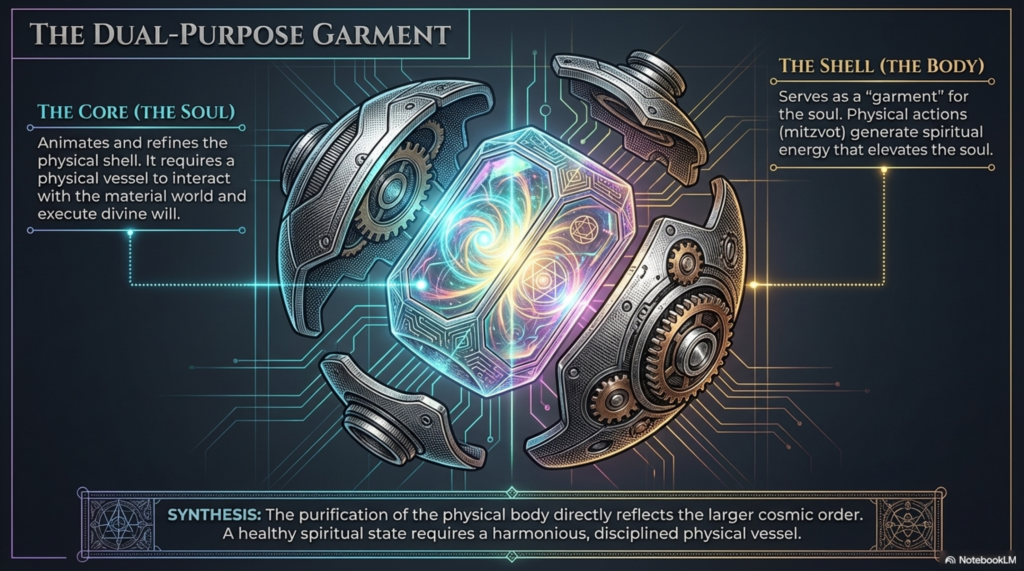
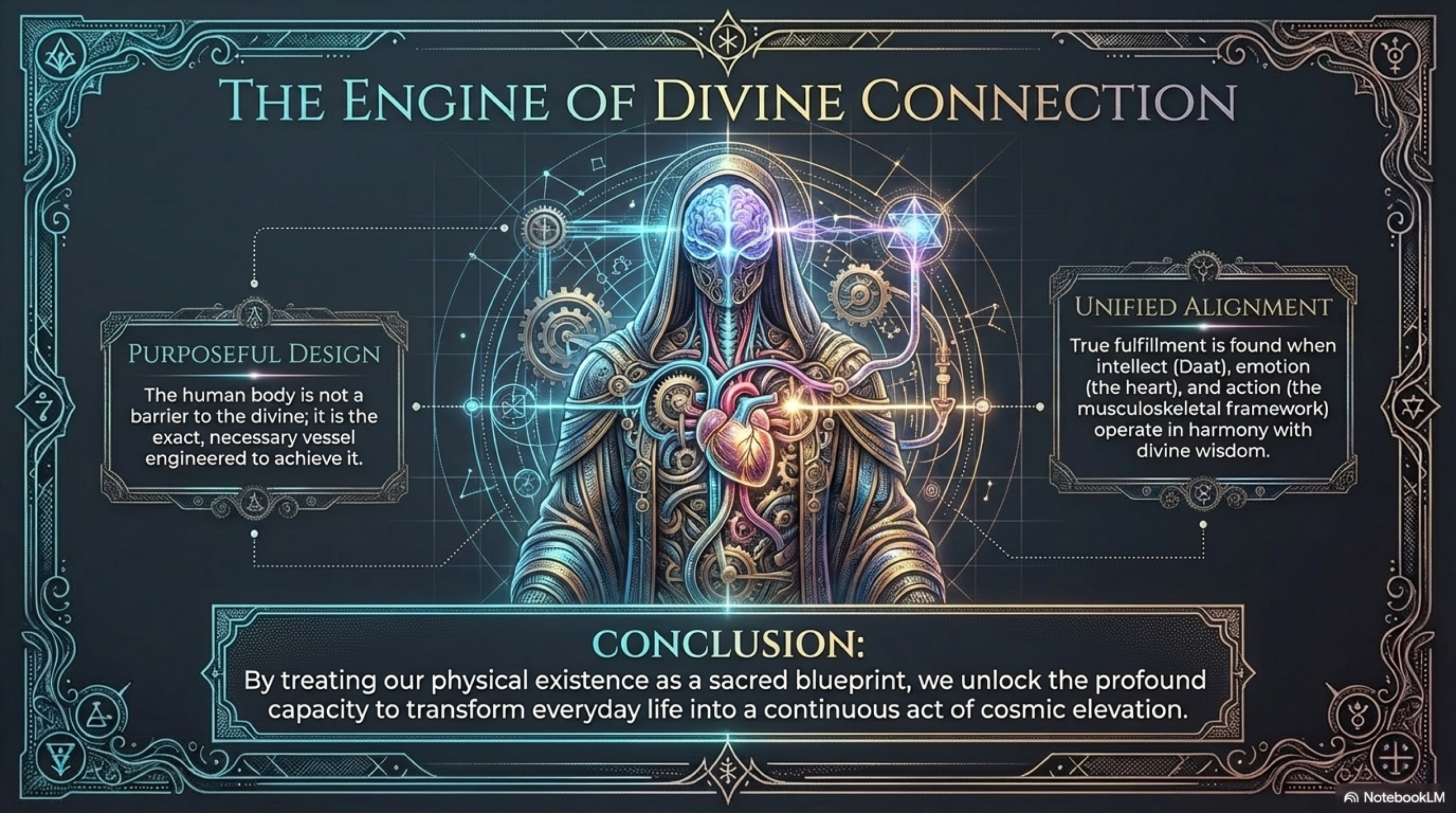
While many ascetic traditions view the body as a prison to be escaped, Kabbalah offers a more integrated perspective: the body is a necessary partner and a “dual-purpose garment.” It is the vessel through which the soul interacts with the physical world, and its condition dictates how much “divine light” we can actually hold and express.
This shifts our perspective on health from one of vanity to one of “vessel-polishing.” When we care for our physical selves, we aren’t just managing biology; we are refining the garment of the soul. A neglected body isn’t just a health risk; it is a clouded lens that obscures our spiritual potential.
“Man was fashioned in the pattern of the Torah… the Torah is nothing less than an illumination of what we call God’s Mind.”
By recognizing that the human form embodies the Torah’s commandments, we see that caring for the “garment” is a sacred duty. The body doesn’t just reflect the soul; it reveals the soul’s current capacity to manifest goodness in the world.
——————————————————————————–
Takeaway 2: Digestion is a Metaphor for Spiritual Discernment
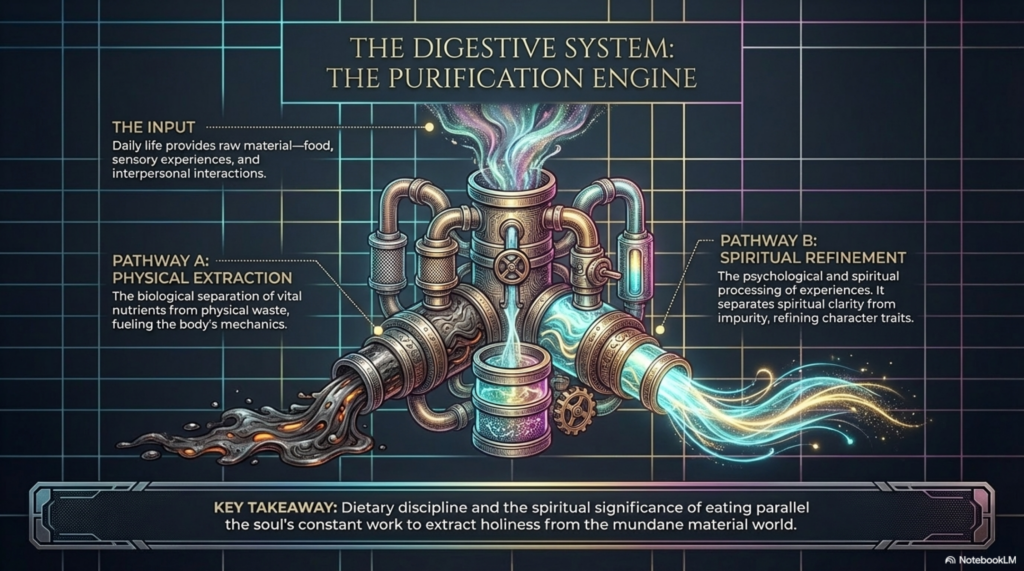
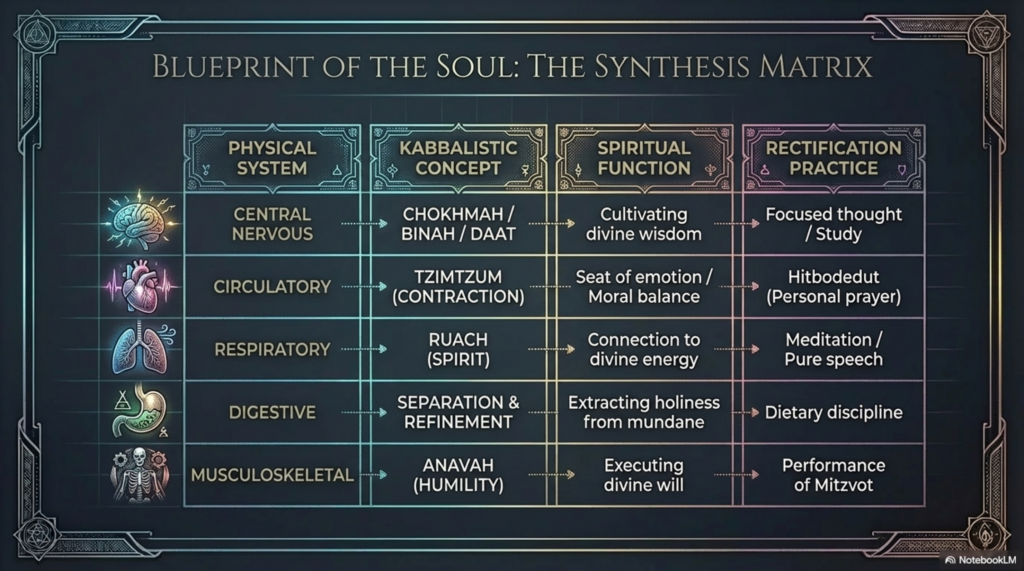
We rarely think of the gut as a site of spiritual labor, yet Kramer’s framework identifies the digestive system as a primary mirror for “spiritual discernment.” At its core, digestion is the act of separation: taking in a substance, extracting the life-sustaining nutrients, and identifying the waste that must be discarded.
In our age of information overload, we are “eating” experiences constantly—consuming social media, ambient noise, and the emotional energy of others. Without spiritual digestion, we suffer from a form of internal “indigestion.” We fail to filter the nutrients from the noise.
Spiritual clarity begins with dietary discipline, not just in what we put on our plates, but in what we allow into our consciousness. By practicing mindfulness in what we consume, we train the soul to perform its own essential filtration—retaining the wisdom that leads to growth while resolutely discarding the “waste” of negativity and distraction.
——————————————————————————–
Takeaway 3: The “Inner Temple” is Built from Intellect (Daat)
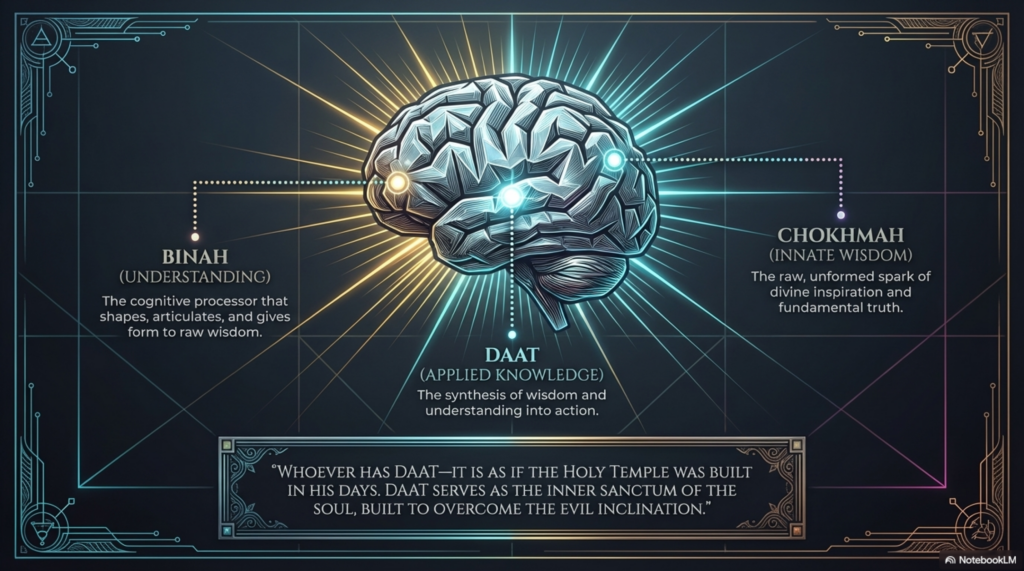
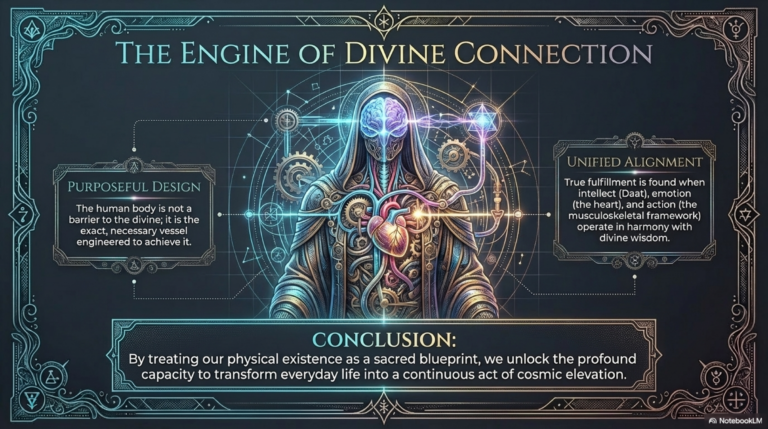
In Kabbalistic thought, the mind functions through a triad: Chokhmah (the flash of innate wisdom), Binah (the expansion of that wisdom into understanding), and Daat (the application of knowledge). While Chokhmah and Binah provide the blueprints, Daat is the construction site.
The source context teaches a staggering principle: Daat is equated with the Holy Temple. Why? Because Daat is the faculty that allows us to apply what we know to overcome our negative inclinations.
“Whoever has Daat—it is as if the Holy Temple was built in his days.”
Your mind is not a static container; it is an active site of daily architecture. When you engage in productive, holy thoughts, you are literally building an inner sanctuary. To renew your mind daily is to emulate the divine creative process, turning abstract wisdom into a lived, structural reality within yourself.
——————————————————————————–
Takeaway 4: Speech as a Tool for Exile or Liberation
The power of the word is the ultimate divine gift, yet it is often the most misused. In spiritual anatomy, the quality of our communication determines our spiritual “location.” Kramer explicitly notes that “blemished speech corresponds to exile.”
Think of the biblical “Sin of the Spies,” where negative speech about the potential of the future led to a collective wandering in the desert. This isn’t just ancient history; it is a psychological reality. When we use our speech for complaining, deception, or “lashon hara” (evil tongue), we create a “desert” in our own lives—a state of inner displacement where the soul feels homeless and disconnected.
Conversely, speech used for prayer, truth, and encouragement is a tool for liberation. Every word you speak is an ethical choice that either binds your soul to its lower instincts or sets it free to ascend.
——————————————————————————–
Takeaway 5: The Senses are the “Seven Lamps” of the Menorah
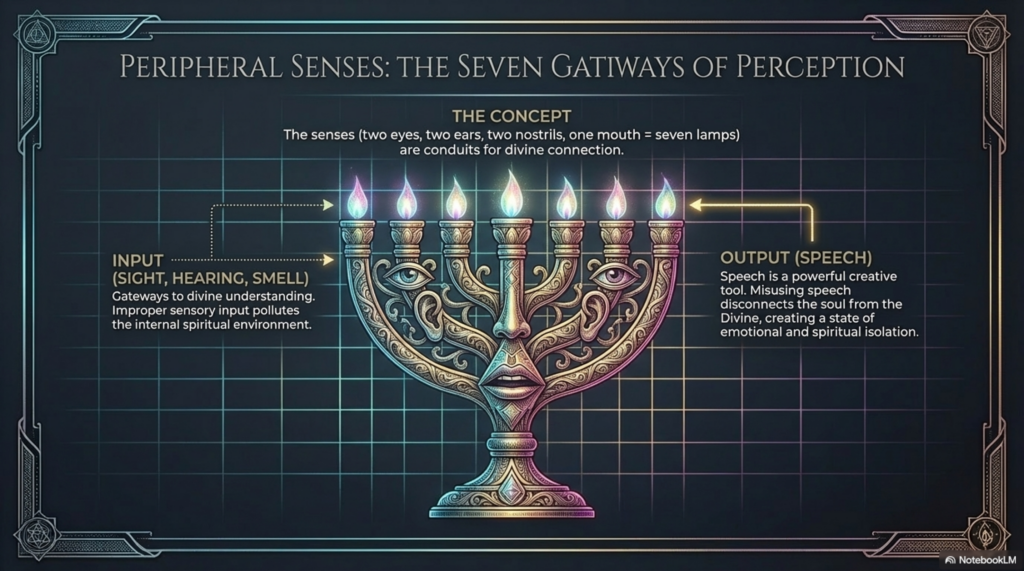
Our senses—sight, hearing, smell, and taste—are portrayed as the “seven lamps” of the Menorah, the sacred candelabrum of the Temple. They are not merely survival mechanisms; they are gateways intended to lead to divine understanding.
The practice of “guarding the gates” is an urgent spiritual necessity. If we allow our senses to be overwhelmed by impurity or mindless sensory consumption, the “lamps” of our clarity become dimmed. The eyes that only look for faults, the ears that crave gossip, and the palate that seeks only mindless indulgence eventually lose the ability to perceive the sacredness hidden in the everyday.
By refining what we choose to perceive—by seeking out beauty and listening for truth—we align these “lamps” to perceive God’s presence in all things. The senses are conduits; when the gates are guarded, they transition from survival tools into instruments of enlightenment.
——————————————————————————–
Conclusion: Toward a Unified Existence
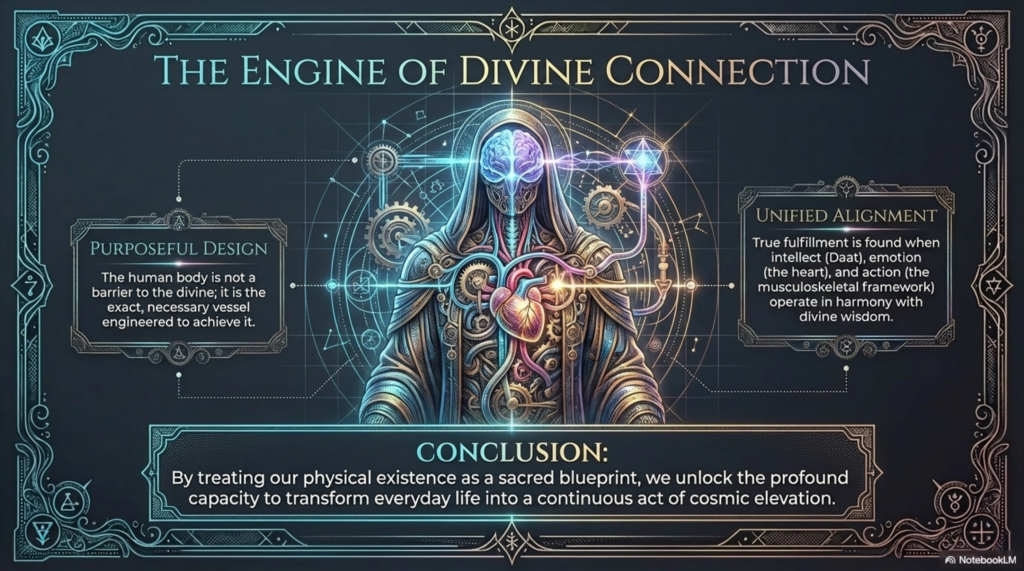
The framework of spiritual anatomy reminds us that the physical and spiritual are not two warring factions, but a single, unified existence. Your heartbeat, your digestion, and your very breath are all pulses within a cohesive divine narrative. When we harmonize the physical and spiritual selves, we stop fighting our nature and begin using it as a pathway to fulfillment.
Look at your life through this lens today. Choose one specific part of your physical experience—perhaps the quality of your breath, the health of your heart, or the words currently sitting in your mouth.
What is the current state of that “organ” telling you about the state of your inner architecture?
About the Author