On our YouTube Channel Rachav – Foundation – YouTube
Prolegomena
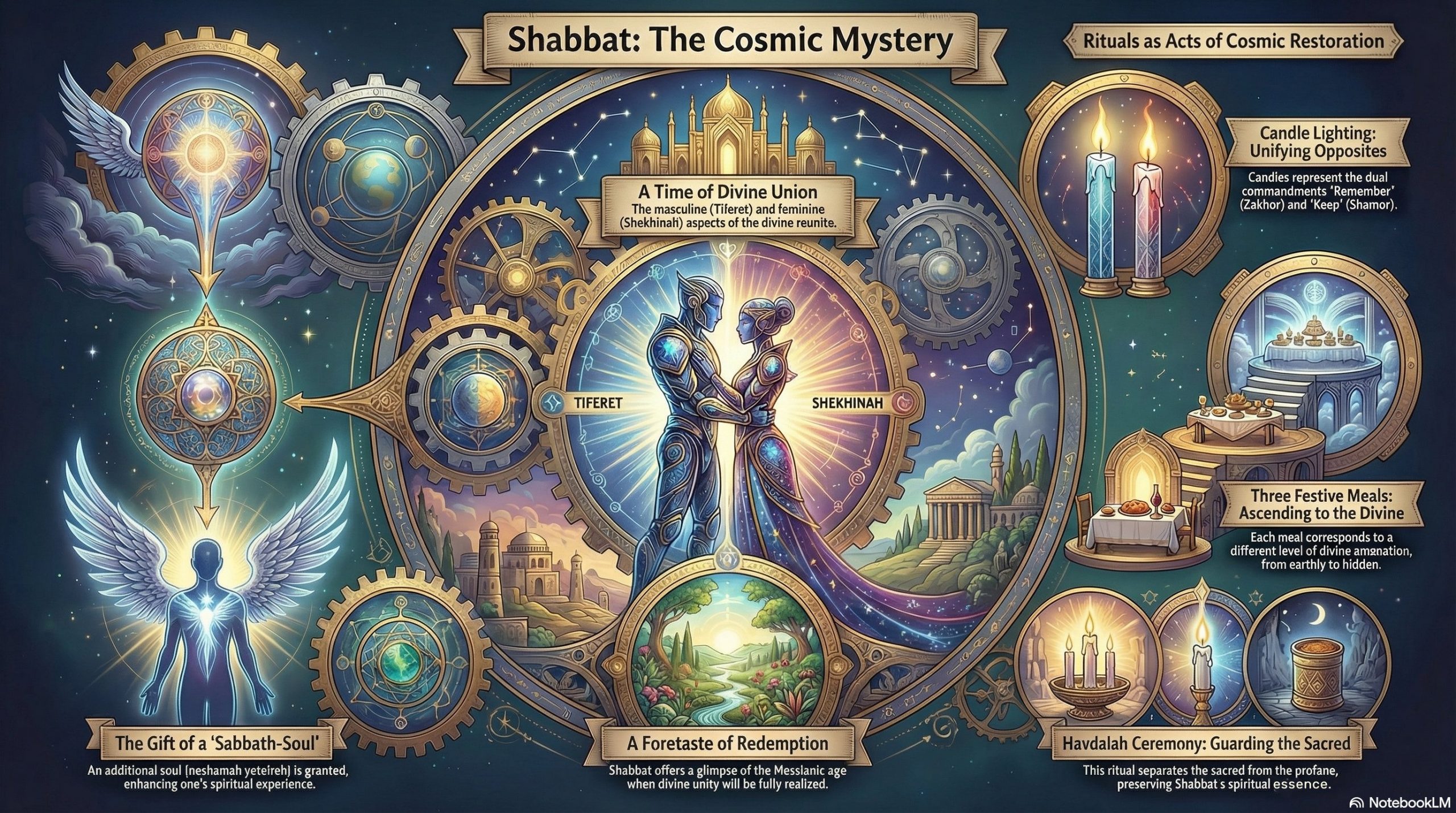
This exposition is based on Elliot K. Ginsburg’s Sod Ha-Shabbat: The Mystery of the Sabbath and provides a scholarly investigation into the mystical and Kabbalistic dimensions of the Jewish day of rest. Primarily examining the 16th-century work Tola’at Ya’aqov by Meir ibn Gabbai, the sources describe the Sabbath as a cosmic drama where the earthly and divine realms achieve a harmonious union. Key themes include the theurgical power of rituals, such as candle lighting and festive meals, which are viewed as tools for spiritual elevation and the restoration of cosmic balance. The text highlights the concept of the Sabbath-soul and the day’s role as an eschatological foretaste of ultimate redemption and divine unity. Ultimately, Ginsburg portrays these traditions as a bridge between structured ritual and an ecstatic, transformative experience of the divine presence.
Introduction: The Cosmic Mechanism of Repair
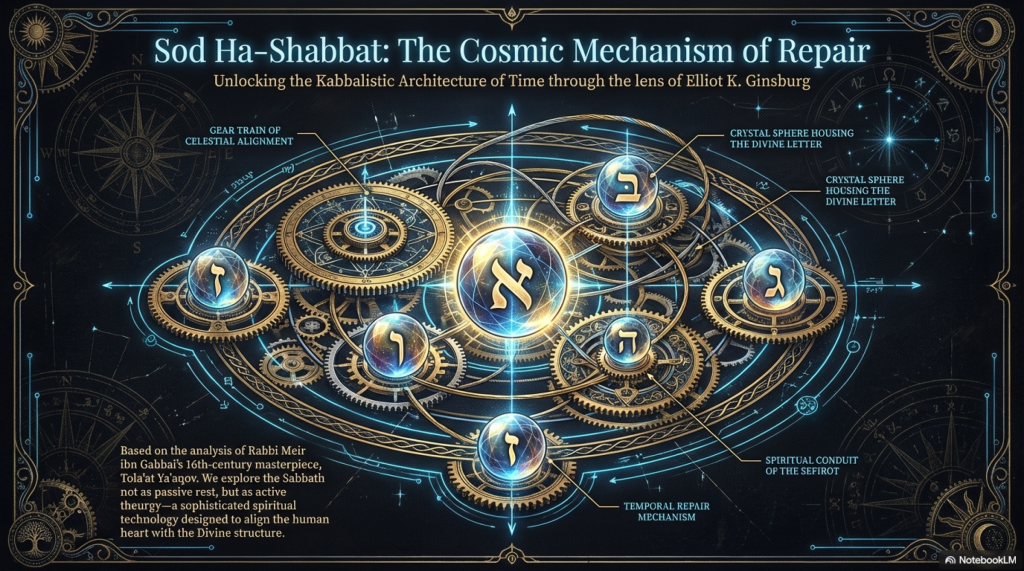
The Sabbath is often misunderstood as a passive withdrawal from labor. However, through the lens of Rabbi Meir ibn Gabbai, the 16th-century author of Tola’at Ya’aqov (The Silkworm of Jacob), we see it as a sophisticated theurgical technology. The Sabbath is the “Cosmic Engine” that aligns the human heart with the divine architecture of the universe.
The Architect and the Operating System
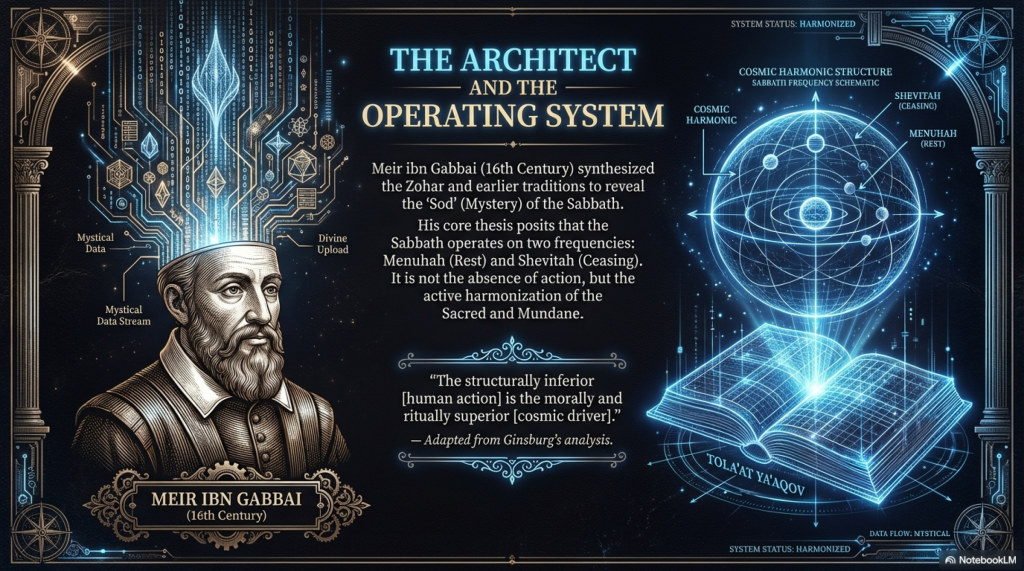
Meir ibn Gabbai synthesized the Zohar to reveal the Sod (Mystery) of the Sabbath. He argues that the day operates on two specific frequencies:
- Menuhah (Rest): An ontological state of being.
- Shevitah (Ceasing): The active cessation of mundane creation.
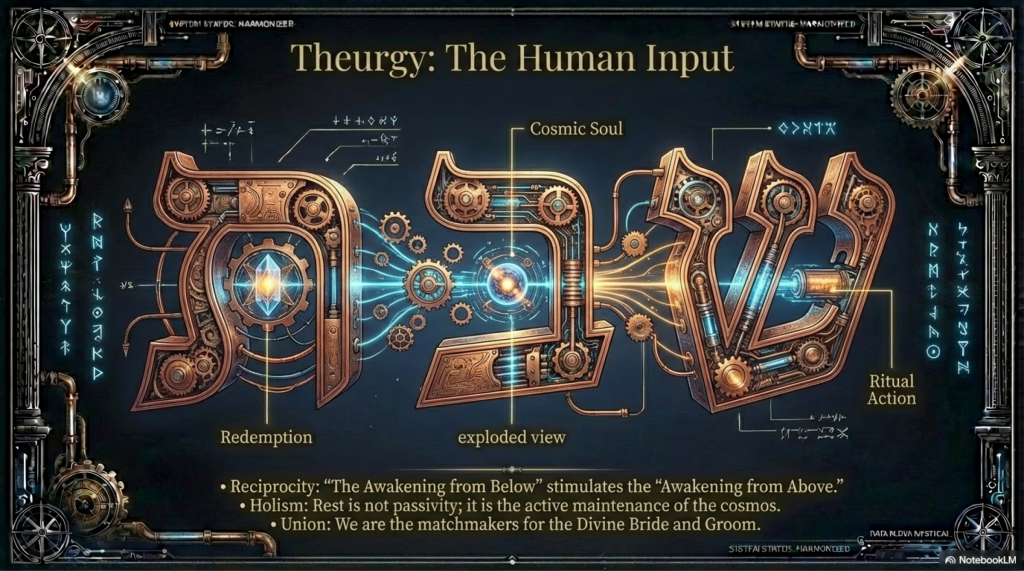
In this system, human action is the “cosmic driver”. While our actions may seem inferior to the Divine, they are ritually superior because they initiate the flow of the entire system
Phase 1: Preparation and System Ignition
The Silkworm Jacob
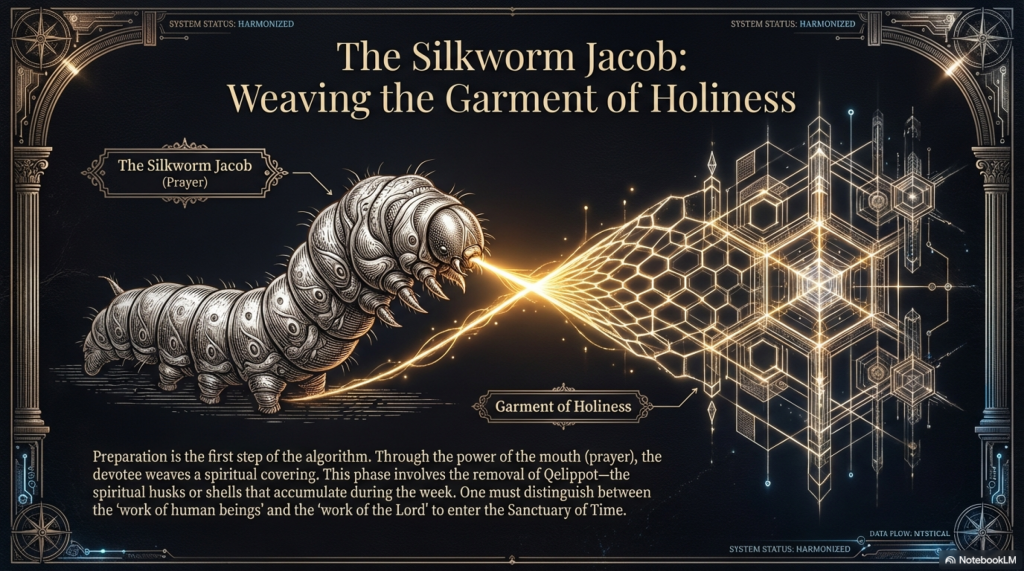
The title of ibn Gabbai’s work, Tola’at Ya’aqov, draws on a Midrashic cognate regarding the “power of the mouth”. Just as a silkworm weaves its own covering, the devotee uses prayer to weave a Garment of Holiness.
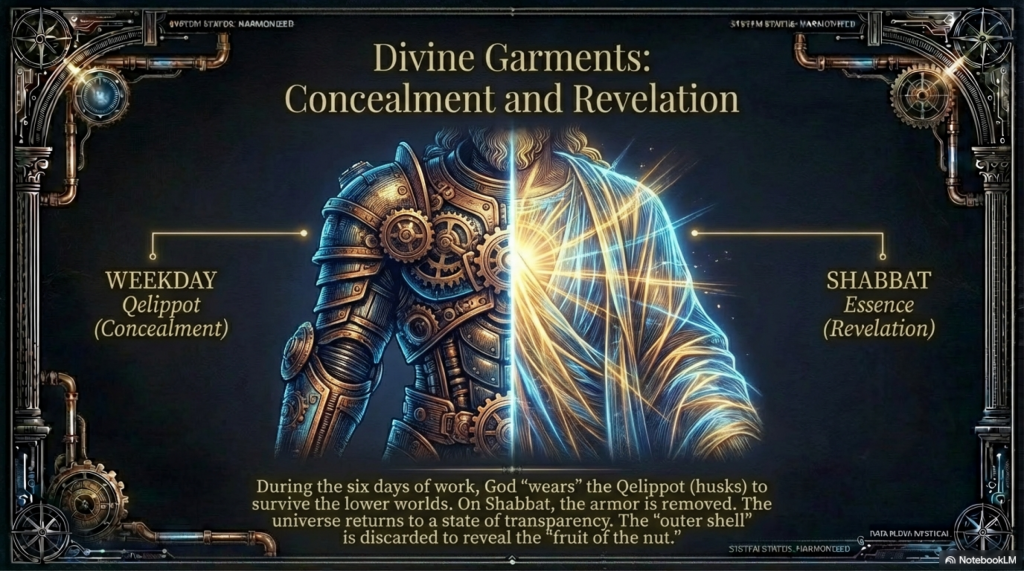
- Removing the Qelippot: During the week, “husks” or “shells” (Qelippot) accumulate around the soul. Preparation involves the removal of these shells to enter the “Sanctuary of Time”.
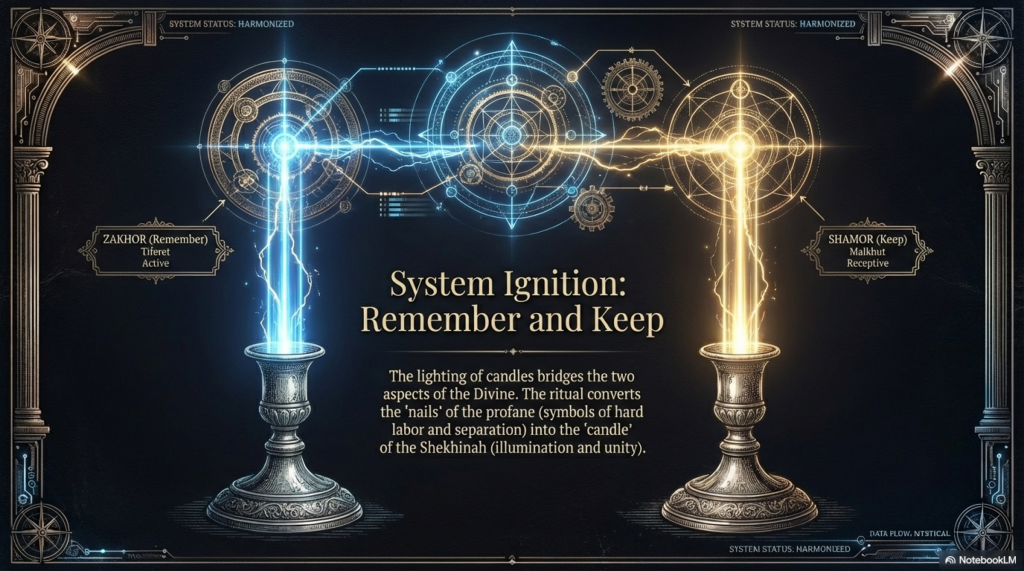
System Ignition: Zakhor and Shamor
The ignition of the Sabbath occurs through the lighting of candles, which bridges two aspects of the Divine:
- Zakhor (Remember): Associated with the Sefirah of Tiferet (The Active/Male principle).
- Shamor (Keep): Associated with the Sefirah of Malkhut (The Receptive/Female principle).
The ritual converts the “nails” of the profane—symbols of hard labor—into the “candle” of the Shekhinah, turning separation into unity
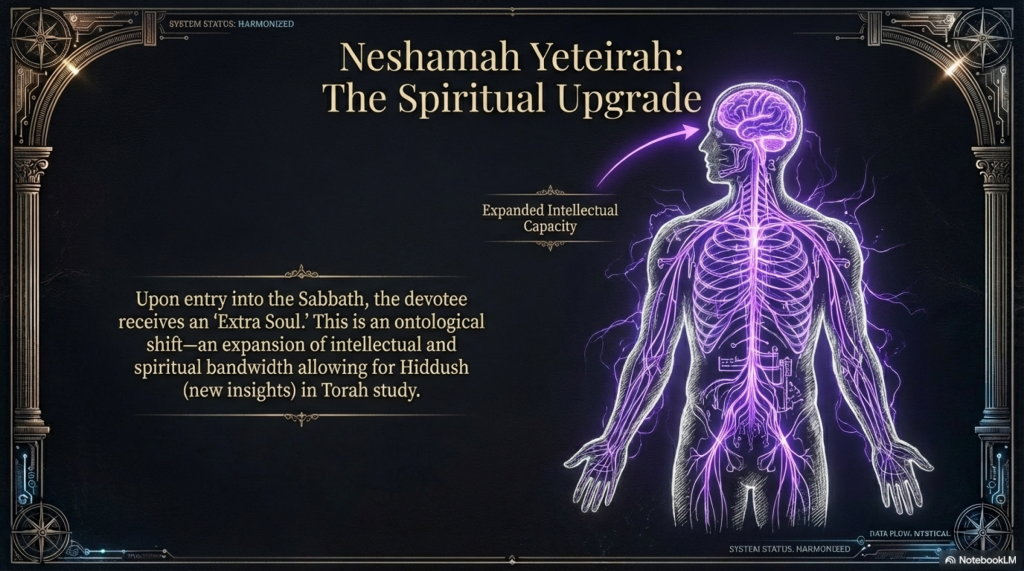
Phase 2: The Spiritual Upgrade
Upon entering the Sabbath, the “system” receives a hardware upgrade: the Neshamah Yeteirah or “Extra Soul”.
- Bandwidth Expansion: This is an expansion of spiritual and intellectual bandwidth.
- Hiddush: This upgrade allows the individual to generate Hiddushim—new insights and “executable programs” of Torah wisdom that were inaccessible during the week
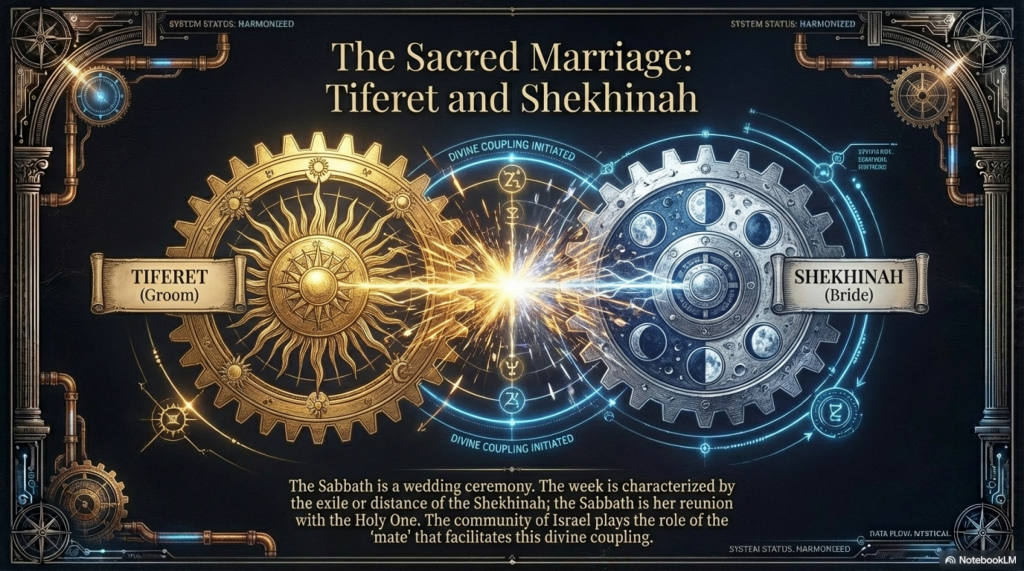
Phase 3: The Sacred Marriage and Alchemy
Divine Coupling
The Sabbath is essentially a wedding ceremony. During the week, the Shekhinah (the Divine Presence) is in exile or distant. On the Sabbath, she is reunited with the Holy One (Tiferet). The community of Israel acts as the “mate” or “matchmaker” that facilitates this coupling through ritual action.
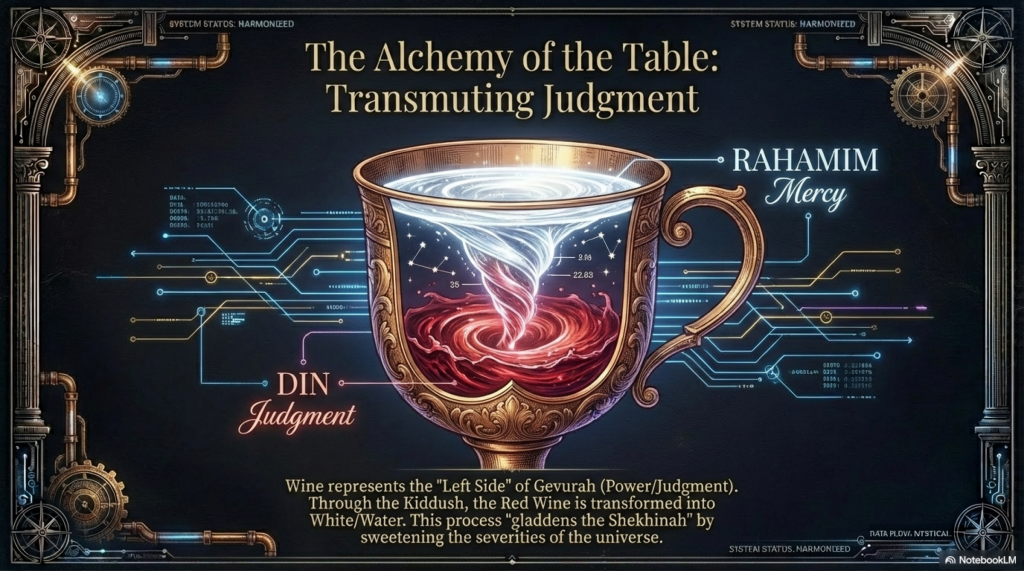
Transmuting Judgment
At the Sabbath table, a form of spiritual alchemy occurs:
- Sweetening the Severities: Wine represents the “Left Side” of Gevurah (Judgment/Power).
- The Kiddush: Through the recitation of the Kiddush, the “Red Wine” of judgment is transformed into the “White/Water” of Rahamim (Mercy). This process “gladdens the Shekhinah” by sweetening the harshness of the universe.
Phase 4: Feeding the Sefirotic Ladder
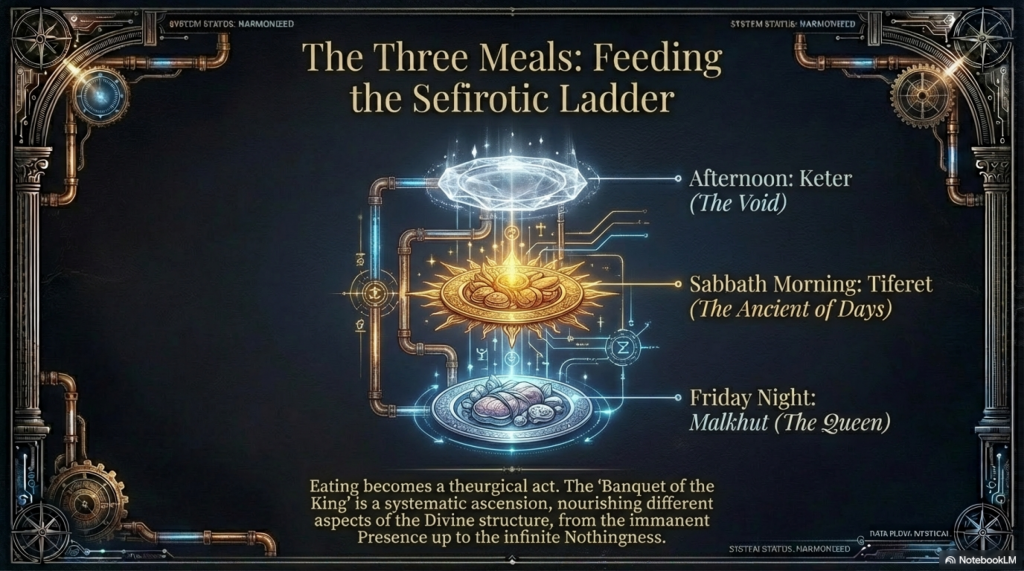
Eating on the Sabbath is not for physical sustenance alone; it is a theurgical act. The “Three Meals” nourish different levels of the Divine structure:
- Friday Night: Nourishes Malkhut (The Queen).
- Sabbath Morning: Nourishes Tiferet (The Ancient of Days).
- Sabbath Afternoon: Nourishes Keter (The Infinite Nothingness/Void)
Phase 5: The Download and the Firewall
Written and Oral Torah
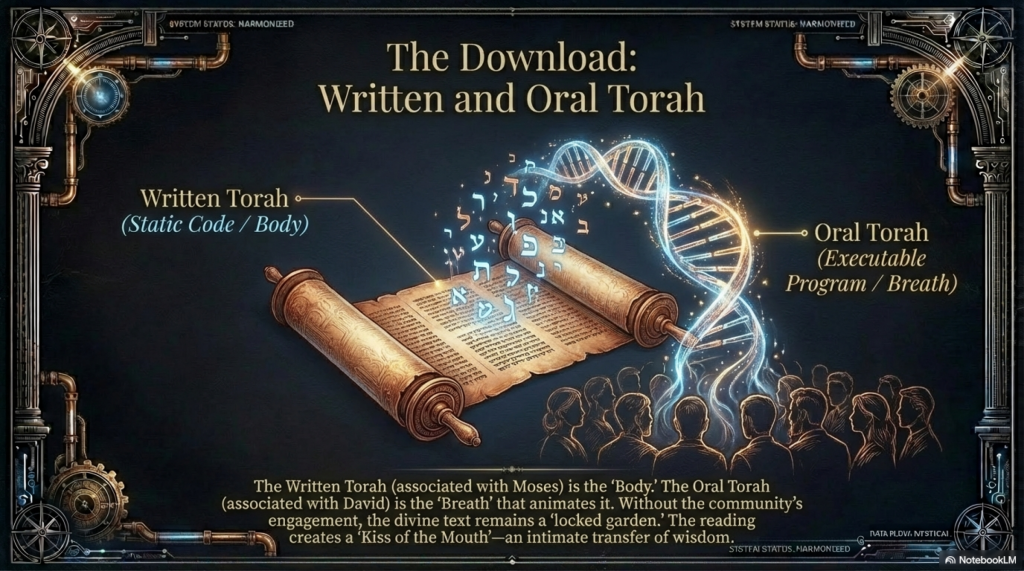
The Sabbath facilitates a “Download” of wisdom. The Written Torah is the “Static Code” or “Body,” while the Oral Torah is the “Executable Program” or “Breath” that animates it. Without the community’s engagement, the text remains a “locked garden”.
Havdalah: The Firewall
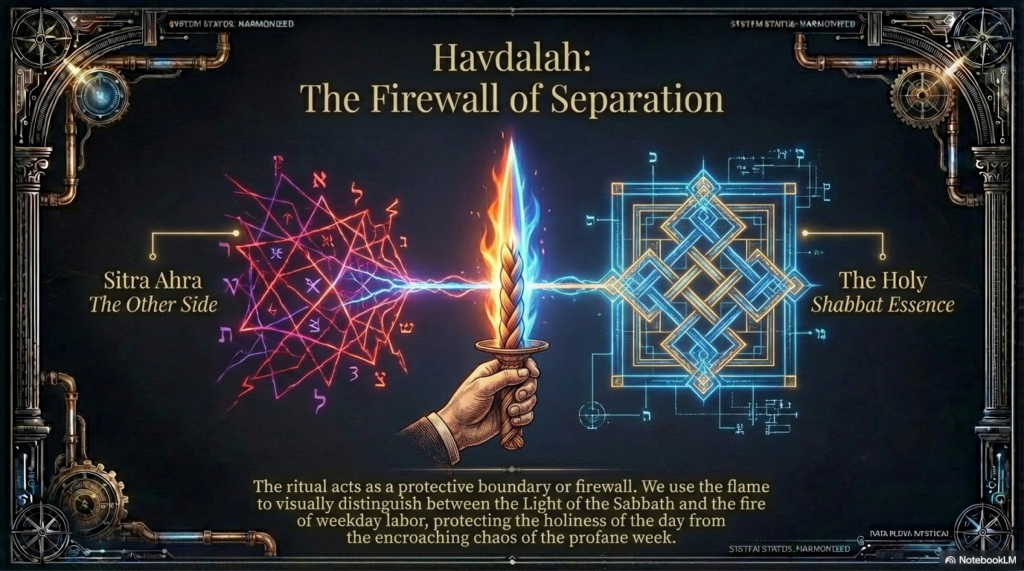
As the Sabbath concludes, the ritual of Havdalah acts as a Firewall of Separation. The flame is used to distinguish between the Light of the Sabbath and the fire of weekday labor, protecting the “Holy Shabbat Essence” from the encroaching chaos of the “Other Side” (Sitra Ahra).
Conclusion: A Simulation of the World to Come
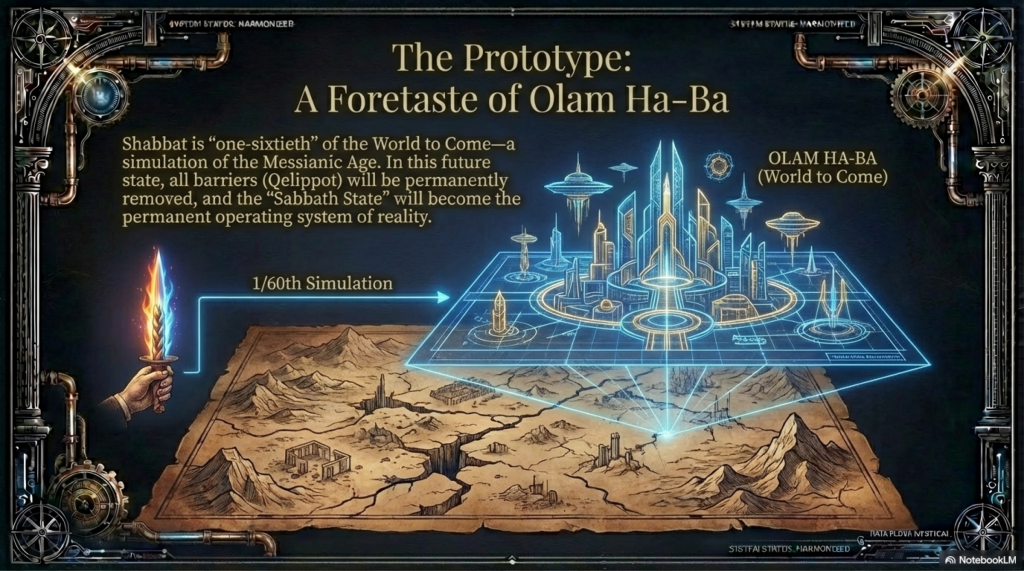
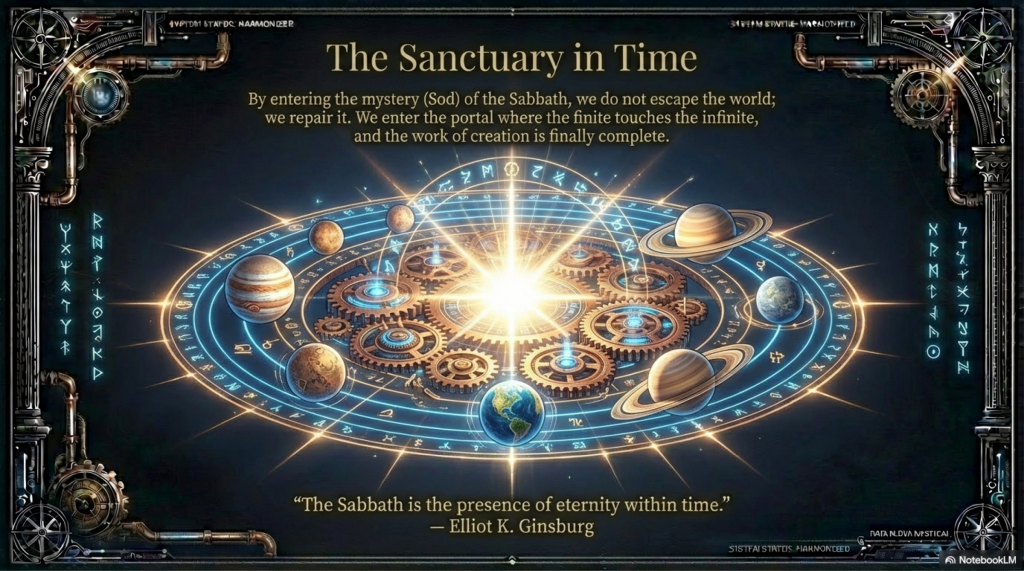
The Sabbath is described as “one-sixtieth” of the World to Come (Olam Ha-Ba). It is a simulation of a future operating system where the Qelippot (armor) of the weekday will be permanently removed, and the universe will return to a state of absolute transparency. By entering the mystery of the Sabbath, we do not escape the world; we repair it
A Long Audio ‘Deep Dive’
The Inseparable Dance: Ritual and Mysticism in the Kabbalistic Sabbath of Elliot K. Ginsburg’s Sod Ha-Shabbat
Abstract
This article examines Elliot K. Ginsburg’s Sod Ha-Shabbat: The Mystery of the Sabbath, a critical analysis of the mystical dimensions of the Sabbath within classical Kabbalah. It argues that within the Kabbalistic framework presented by Ginsburg, ritual practice and mystical experience are not separate domains but are fundamentally inseparable. Embodied ritual serves as the primary vehicle for achieving theurgical and spiritual transformation. Through an exploration of key Sabbath observances—including candle lighting, the three festive meals, the creative power of prayer, and the concluding Havdalah ceremony—this paper demonstrates how physical acts are imbued with profound mystical significance. These rituals are understood not merely as symbolic gestures but as potent theurgical practices that directly influence the divine realms, fostering cosmic harmony and the union of divine attributes. The Kabbalistic Shabbat, as illuminated by Ginsburg, thus offers a compelling model of embodied mysticism where intentional physical acts are essential for realizing a foretaste of ultimate redemption and experiencing the restoration of divine unity.
1.0 Introduction: Bridging Practice and Aspiration
In the academic study of religion, a persistent tension often exists between exoteric ritual observance—the external, communal acts of a tradition—and esoteric mystical experience—the internal, personal quest for divine union. Elliot K. Ginsburg’s landmark work, Sod Ha-Shabbat: The Mystery of the Sabbath, offers a powerful case study that collapses this dichotomy within the intricate framework of classical Kabbalah. By weaving together a rich tapestry of biblical citations, rabbinic interpretations, and Kabbalistic concepts from sources such as the Zohar, Ginsburg illuminates a vision of the Sabbath that transcends its conventional understanding. Here, Shabbat is not merely a day of rest but a “cosmic, theurgical event that bridges the human and divine.”
This article synthesizes Ginsburg’s analysis to demonstrate that in the classical Kabbalistic tradition presented by Ginsburg, embodied rituals are the indispensable means by which mystical aspirations are realized. Practices such as lighting candles, sharing meals, and reciting specific prayers are not ancillary to the mystical goal; they are the very mechanisms for achieving devequt (clinging to God) and participating in tikkun (cosmic restoration). The physical performance of Sabbath commandments becomes the primary vehicle for influencing the divine realm and drawing sacred energy into the world. This exploration will proceed by first outlining the cosmic framework of the Kabbalistic Sabbath, then analyzing its key theurgical rituals, and finally, examining its profound eschatological significance as a prelude to ultimate redemption.
2.0 The Cosmic Drama of Shabbat: A Framework for Divine Union
To comprehend the function of individual Sabbath rituals, one must first grasp the overarching Kabbalistic conception of Shabbat as a cosmic drama. Within this mystical tradition, the Sabbath is not a passive pause from the work week but the pivotal moment for restoring cosmic balance and facilitating an intimate union within the Godhead itself. It is a sacred interval when ordinary time is suspended, allowing divine energy (shefa) to flow from the higher realms into the earthly domain, harmonizing the fundamental dualities of creation—male and female, light and darkness, the sacred and the mundane.
The central mystical event of Shabbat is the sacred union of the feminine divine aspect, the Shekhinah (also identified with the sefirah of Malkhut, or Sovereignty), with her masculine counterpart, Tiferet (Beauty/Harmony). Drawing upon the rich marital and intimate imagery of the Zohar, this union is portrayed as the reunification of an “exiled bride who is reunited with her lover.” This cosmic hieros gamos, or sacred marriage, symbolizes the restoration of divine harmony, which has been fragmented by the discord of the profane week. The entire structure of Sabbath observance is designed to facilitate, celebrate, and protect this divine unification. This conceptual framework provides the context in which specific, embodied practices become not just symbolic but theurgically potent acts, transforming human participants into active partners in the ongoing drama of creation and redemption.
3.0 Theurgy in Practice: How Ritual Embodies Mystical Aspiration
The heart of the Kabbalistic vision detailed by Ginsburg lies in the theurgical power of human action. In this context, “theurgy” refers to the capacity for ritual performance to directly influence and participate in the divine processes of unification and restoration. Far from being mere representations of spiritual ideas, Sabbath rituals are understood as the essential, embodied practices that make mystical union and cosmic healing manifest. Each act, performed with proper intention, becomes a conduit for divine energy and an instrument for achieving cosmic balance.
3.1 The Inauguration of Sacred Light: Candle Lighting
The inauguration of the Sabbath with the lighting of candles is the initial transformative practice. This ritual is far more than a symbolic gesture; it is a theurgical act that actively draws divine light into the world. According to this Kabbalistic understanding, the candles represent the dual commandments of “Remember” (Zakhor) and “Keep” (Shamor), which are linked directly to the masculine and feminine sefirotic principles of Tiferet and Malkhut, respectively. The act of kindling the flames serves as a “metaphor for bringing light into the darkness of the world,” reflecting and inviting the divine light of the Shekhinah. By performing this ritual, the practitioner does not simply welcome the Sabbath but actively participates in the initial stages of the divine union that defines this sacred time.
3.2 Divine Sustenance: Qiddush and the Three Festive Meals
This initial act of drawing sacred light into the home establishes the foundation for the subsequent rituals of sustenance and communion. The physical act of eating is elevated to a profound mystical encounter during the three festive meals of Shabbat. These are not mere communal gatherings but are ritualized communions with different levels of divine emanation. This Kabbalistic mapping connects the meals to the sefirotic structure:
• The First Meal (Friday night): Celebrates the feminine aspect of divinity, Malkhut.
• The Second Meal (Saturday day): Focuses on the unification of Malkhut with her consort, Tiferet.
• The Third Meal (Saturday afternoon): Connects the unified couple, and all of creation, to the ultimate divine source, the hidden sefirah of Keter (Crown).
Through blessings like the Qiddush (sanctification over wine) and the intentional partaking of food, physical sustenance is transformed into a vehicle for spiritual elevation. The devotee internalizes the divine energy (shefa) flowing into the world, participating directly in the cosmic cycle of divine union and nourishment.
3.3 Adorning the Divine: The Creative Power of Prayer
Having internalized divine energy through physical sustenance, the practitioner then turns to verbal creativity to actively shape the spiritual cosmos. Prayer on Shabbat is understood as a central theurgical act, capable of creating and transforming spiritual realities. This tradition uses the powerful metaphor of the “‘silkworm Jacob,’ who by the power of his mouth, i.e., prayer, can weave a silken ‘garment of holiness.'” This image illustrates prayer’s capacity to build, adorn, and beautify the divine realm. Specific liturgical moments, such as the recitation of the Qedushah (Sanctification), are interpreted as “acts of divine adornment.” Through these prayers, the worshipping community actively participates in tiqqun, helping to unify the sefirot and create the sacred conditions necessary for the divine union. This vision positions the human practitioner as a crucial partner in maintaining cosmic balance.
3.4 Delineating Sanctity: The Havdalah Ritual
As the Sabbath reaches its zenith through these acts of adornment, a final, crucial ritual is required to protect the sanctity that has been cultivated. The Havdalah ceremony, which marks the end of Shabbat, is a crucial ritual of “delineation between the sacred and the mundane.” Its purpose is to preserve cosmic order by separating the holiness of the Sabbath from the profanity of the coming week. According to this mystical framework, this ritual serves a vital protective role. It acts as a “safeguard against the intrusion of Sitra Ahra (the ‘Other Side’),” the forces of impurity that threaten to disrupt the sacred space created during Shabbat. The blessings over wine, spices, and fire ensure that the spiritual gains and divine light experienced on Shabbat are maintained as the individual re-enters the profane world.
These distinct rituals—from the first flicker of the candles to the last scent of the Havdalah spices—collectively form a coherent and integrated system of embodied mysticism. Each physical act builds upon the last, progressively deepening the practitioner’s participation in the divine drama and moving toward the ultimate goal of these practices: redemption.
4.0 The Sabbath-Soul and the Eschatological Vision
The impact of Sabbath ritual is both cosmic in its scope and deeply personal in its effect, culminating in a powerful eschatological vision. This vision bridges the individual’s mystical experience with the ultimate redemption of all creation. Central to this personal transformation is the concept of the neshamah yeteirah, or the “Sabbath-soul.” According to the Kabbalistic tradition presented by Ginsburg, this is an additional soul granted to each person for the duration of Shabbat. This soul “embodies perfection and aligns with the divine,” enabling a heightened spiritual state, a more profound sense of joy, and a deeper connection to Torah through the delight in discovering new meanings (hiddush).
This weekly experience of spiritual elevation is not an end in itself but serves as a “foretaste of the World-to-Come.” The divine union, cosmic harmony, and heightened consciousness experienced during Shabbat are a microcosm of the Messianic age. The Kabbalistic eschatology analyzed by Ginsburg looks toward a future characterized by the “removal of qelippot (spiritual barriers)” that obstruct the flow of divine energy and separate creation from its source. The ultimate state of existence is conceived as a “perpetual Shabbat,” a time when divine unity will be fully and eternally realized. In this light, the weekly observance of Shabbat becomes more than a commandment; it is a rehearsal for the final redemption, a way of actively participating in and hastening the arrival of the Messianic era. This ultimate vision is realized not through abstract contemplation alone, but through the consistent, embodied practice of Sabbath ritual.
5.0 Conclusion: The Unity of Body and Soul in Kabbalistic Practice
Through the lens of Elliot K. Ginsburg’s incisive analysis in Sod Ha-Shabbat, the classical Kabbalistic tradition presents a profound and integrated model of spirituality where ritual and mysticism are inseparable. This vision radically reconfigures the relationship between the physical and the spiritual, demonstrating that embodied practice is not a mere precursor to mystical insight but is its primary vehicle. The key rituals that define the Sabbath experience—the lighting of candles, the partaking of festive meals, the recitation of prayer, and the ceremony of Havdalah—are revealed as potent theurgical acts essential for achieving mystical union with the divine and participating in the ongoing work of cosmic restoration.
The Kabbalistic Shabbat stands as a powerful testament to a spirituality where the path to divine connection, communal identity, and universal redemption is paved with intentional, physical acts. It proves that in this rich mystical tradition, the soul’s deepest aspirations are not achieved in spite of the body, but through it. The dance between embodied practice and spiritual aspiration is not a performance of two separate partners, but the unified movement of a single, integrated being striving for harmony with the cosmos and its Creator.
6.0 Bibliography
Elior, Rachel. “Mystical Practices in Jewish Tradition: The Role of Shabbat.” In Mysticism in Judaism. Leiden: Brill, 2011.
Ginsburg, Elliot K. “The Mystical Dimension of Shabbat: An Exploration of its Spiritual Significance.” Journal of Jewish Mysticism 1, no. 1 (1999).
Ginsburg, Elliot K. “The Role of Ritual in Jewish Spirituality: A Historical and Theoretical Perspective.” Jewish Studies Quarterly 25, no. 3 (2010).
Green, Arthur. Jewish Ritual: A Guide to the Spiritual Dimensions. Woodstock, VT: Jewish Lights Publishing, 2004.
Idel, Moshe. “The Sabbath as a Symbol of Divine Presence.” The Journal of Jewish Thought and Philosophy 15, no. 2 (2007).
Matt, Daniel C. Kabbalah: A Very Short Introduction. New York: Oxford University Press, 2009.
About the Author