via IFTTT
The Dangerous Power of a Leaflet: 4 Lessons in Moral Courage from the White Rose
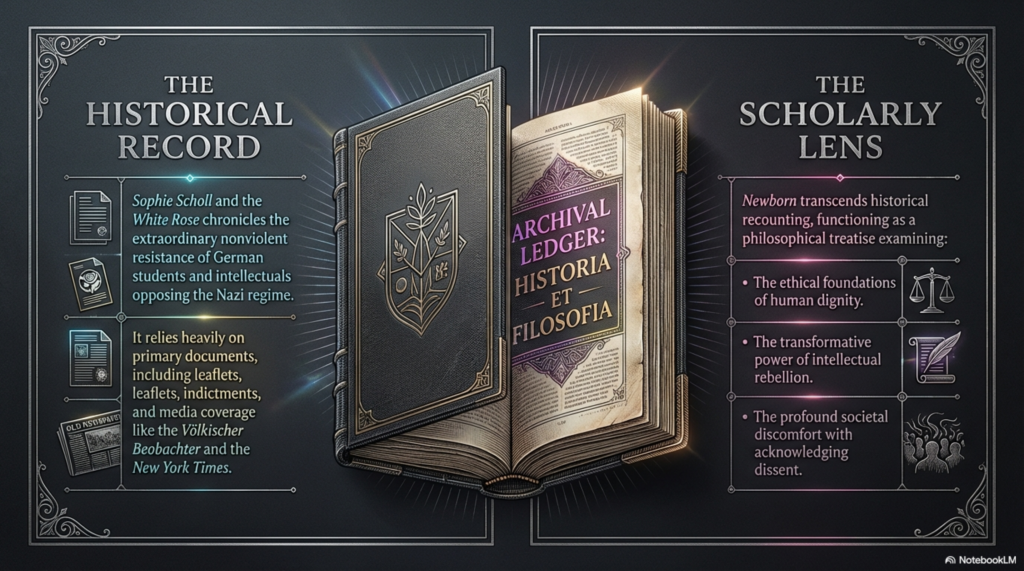
In the shadowed basements of Munich, the rhythmic, metallic clatter of a hand-cranked mimeograph machine served as a heartbeat for a dying conscience. Here, Sophie and Hans Scholl—students with vibrant futures, favorite poets, and deep familial ties—undertook a task that the Gestapo considered more volatile than a ticking bomb. They were young people who chose to trade the safety of silence for the visceral risk of the printed word, pitting a few stacks of paper against the monolithic terror of the Third Reich. This was the White Rose: a small circle of intellectuals whose “relatable curiosity” lies in how their mere existence terrified a state built on absolute obedience.
Words are Weapons of Intellectual Rebellion
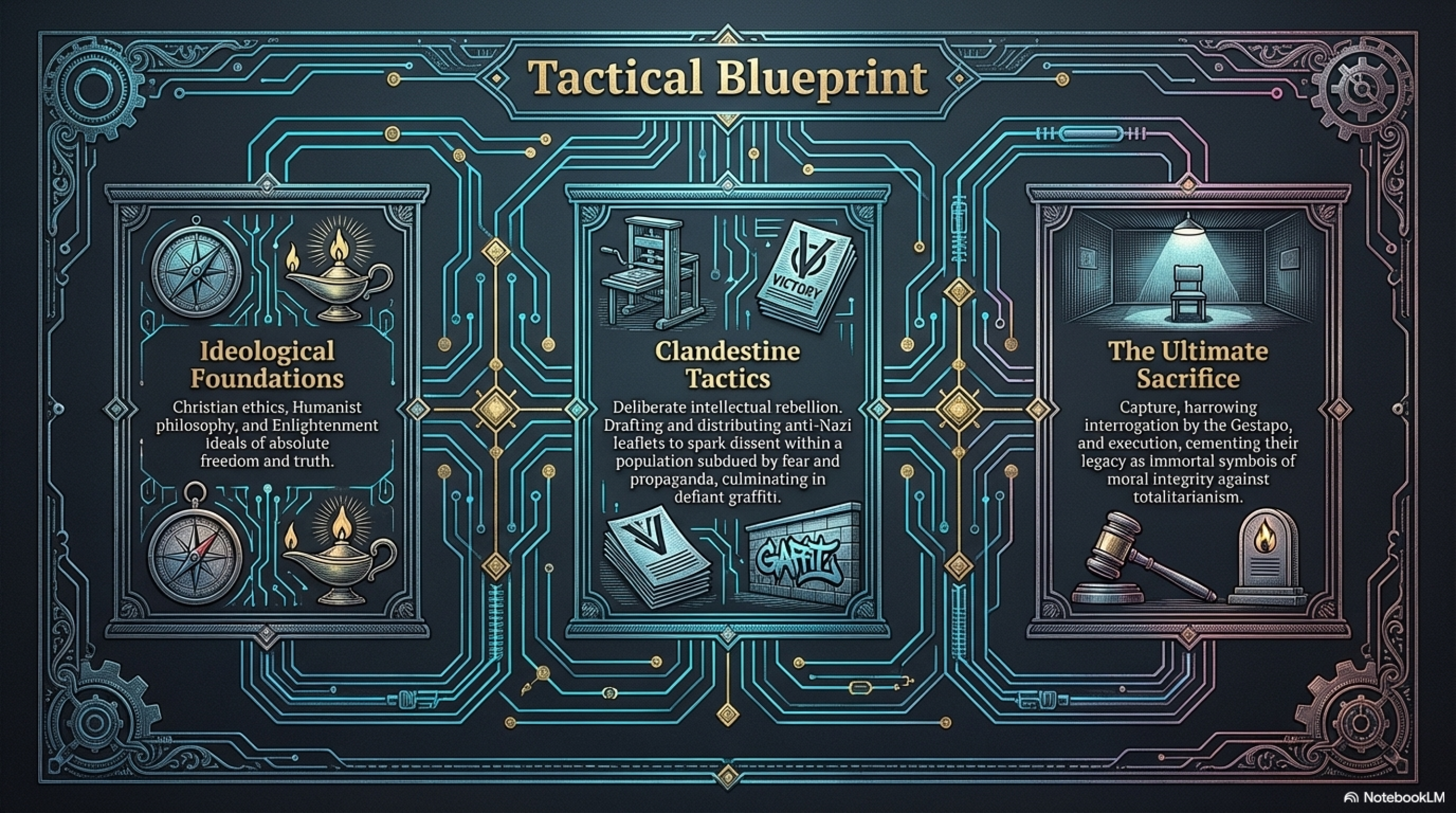
The White Rose understood that in a society suffocated by state propaganda, the most radical act was to reclaim the language of truth. Their clandestine leaflets were not merely political pamphlets; they were instruments of a spiritual awakening, grounded in a sophisticated synthesis of Christian ethics, humanist philosophy, and Enlightenment ideals. This intellectual defiance targeted the regime’s very legitimacy, seeking to trigger a collective moral awakening among a populace subdued by fear.
This was more than a political protest; it was an invitation to teshuva, a deep-seated repentance and a confrontation with the national soul. The students believed that a spiritual “reckoning” was the only way to purge the poison of totalitarianism from the German identity. They recognized that the youth, long fed a diet of abominable lies, were the only ones capable of leading this moral restoration. Their first appeals were a direct challenge to the conscience, described as:
“the reckoning of German youth with the most abominable tyrant our people have ever been forced to endure.”
The Redefinition of Loyalty and Treason
To the Nazi state, loyalty was a hollow shell—defined solely as blind, unthinking obedience to the Führer. In the courtroom and the pages of the Völkischer Beobachter, the regime attempted to dehumanize the Scholls and their friend Christoph Probst, branding them as “traitors” who had betrayed their nation during an existential war. The state’s judicial machinery sought to frame their dissent not as a matter of conscience, but as a clinical case of high treason and national sabotage.
However, the White Rose members consciously redefined loyalty as a commitment to a higher, universal law: the “true loyalty to humanity.” They realized that to remain “loyal” to a murderous regime was to commit the ultimate treason against human dignity and God. By choosing moral clarity over state-mandated compliance, they exposed the profound gulf between legal obedience and ethical righteousness. Their sacrifice demonstrated that a citizen’s highest duty is often to resist the state in order to save the soul of the nation.
The “Culture of Avoidance” and the Battle for Memory
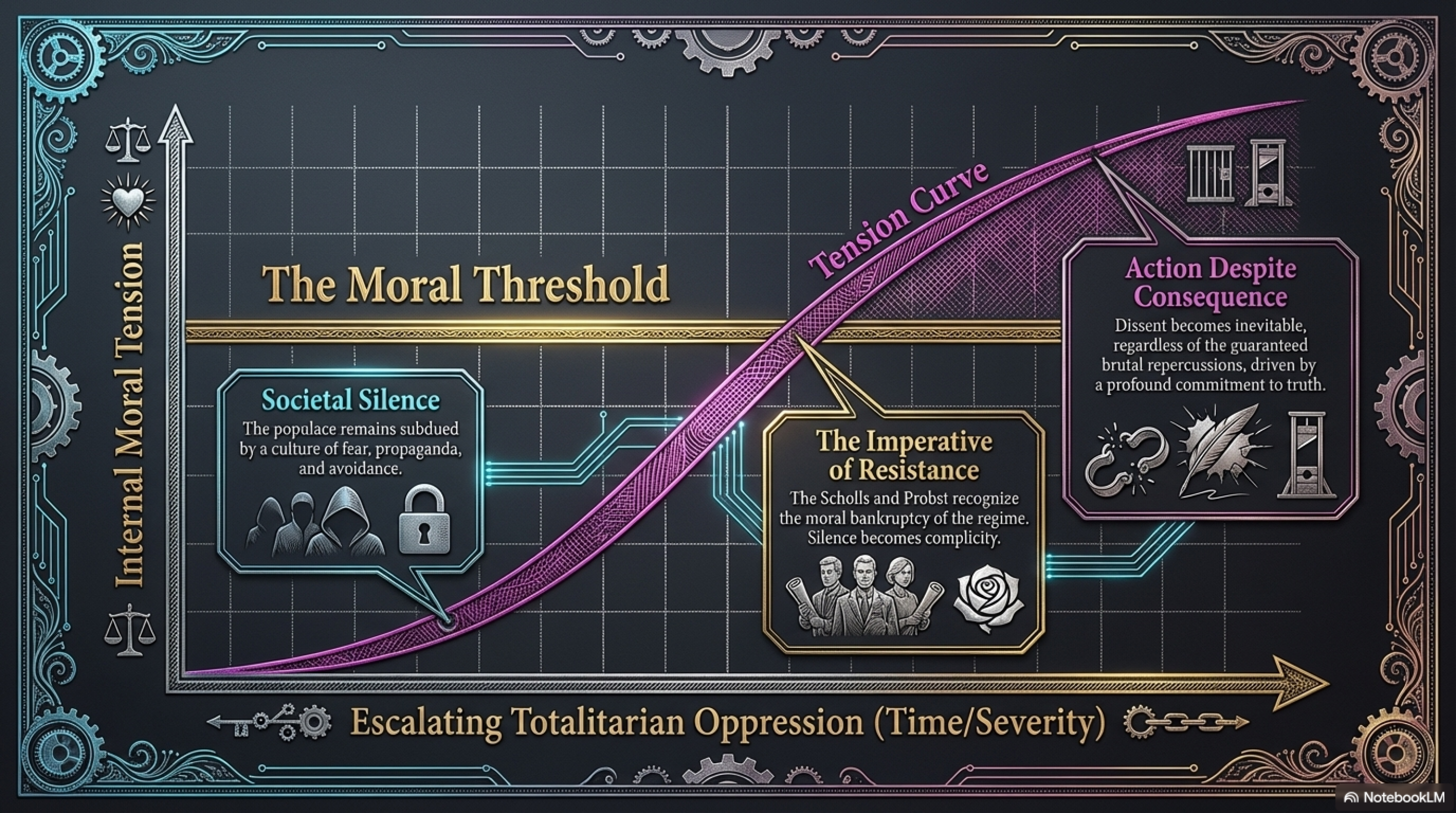
The legacy of the White Rose did not find immediate fertile ground in the ruins of post-war Germany; instead, it met a chilling “culture of avoidance.” As historian Jud Newborn notes, there was a profound societal discomfort and a lingering reluctance to engage with the group’s history. For many survivors, the memory of the Scholls served as a painful mirror, reflecting their own passivity and the complexity of their collective guilt.
It is often far easier for a society to mourn the passive victims of a tragedy than to celebrate the active dissenters who proved that resistance was, in fact, possible. For decades, some Germans even maintained the wartime narrative that the students had undermined the nation in its hour of need.
“Some said angrily that the White Rose members were traitors to their country in a time of war.”
It took the 1970s “Holocaust” television series to finally shatter this silence, forcing a younger generation to confront the uncomfortable truths their parents had buried.
The Prophecy of the Scaffold
The “judicial guillotine” of the People’s Court moved with a harrowing, panicked speed, reflecting the regime’s desperate fear that the students’ ideas might prove infectious. Following a visceral military turning point, graffiti began appearing across Munich—”Revenge for Stalingrad! We want our liberty back!”—signaling that the regime’s facade of invincibility was finally crumbling. Despite the brutality of their interrogation, Sophie Scholl, Hans Scholl, and Alexander Schmorell maintained a composure that unnerved their captors.
During the trial, the students displayed a “prophetic awareness” that the law they were being judged by was already dead. Sophie’s defiance was not a mere emotional outburst, but a philosophical commentary on the cyclical nature of tyranny and justice. She understood that those who weaponize the law to crush the innocent will eventually be consumed by the very fires they have lit. As she stood before the judge, her final retort served as a chilling prediction of the regime’s inevitable collapse:
“Soon you will be standing here, where I now stand.”
Conclusion: A Timeless Reckoning
The legacy of the White Rose remains a vital testament to the power of individual agency in an era of rising populism and systemic injustice. Sophie Scholl and her companions remind us that moral courage is not the absence of fear, but the conviction that something else is more important than one’s own safety. Their story proves that even the smallest light can pierce the deepest darkness if it is fueled by the truth.
As we navigate the ethical dilemmas of our own century, we must ask ourselves: In the face of modern injustice, does our loyalty lie with the comfort of the crowd or the dangerous, liberating power of the truth?
About the Author