
via IFTTT
The Trial of the Century: 5 Surprising Historical Truths Behind the Passion Narrative
1. Introduction: The Story We Think We Know
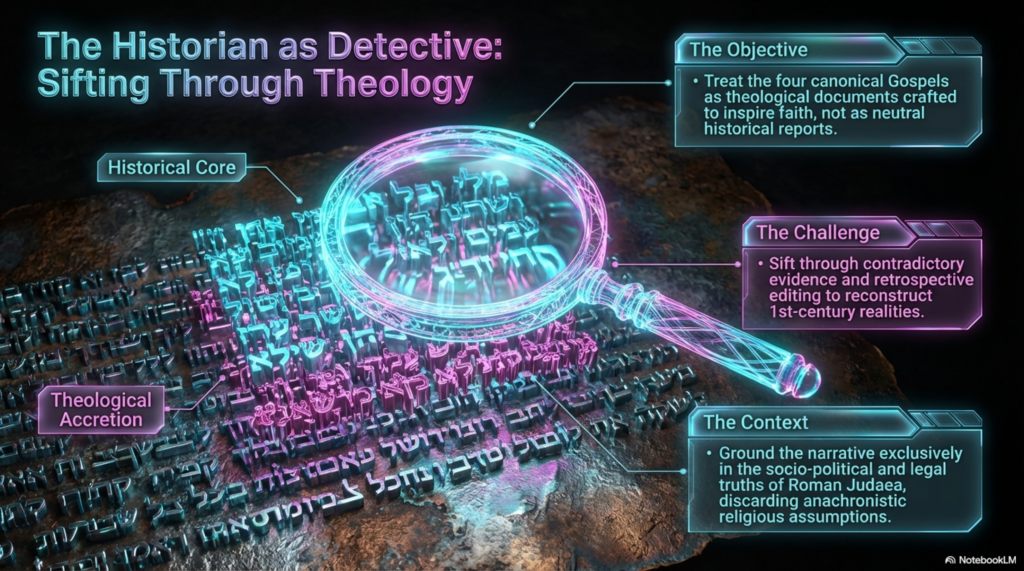
The Passion of Jesus—the grim sequence of his arrest, trial, and execution—stands as the foundational drama of Western civilization. For nearly two millennia, we have viewed this narrative primarily through the stained glass of theology: a preordained journey of sacrifice and redemption. However, the late Geza Vermes, a titan of Jewish history and Dead Sea Scrolls scholarship, invites us to set aside the liturgical shroud and approach these texts with the cold, investigative eye of a detective.
By treating the Gospels not merely as sacred scripture but as historical documents subject to “critical scrutiny,” we uncover a reality far more complex than the traditional Sunday school version. As we sift through the disparate and often conflicting evidence across Matthew, Mark, Luke, and John, we find a story shaped as much by the volatile socio-political tensions of first-century Judea as by divine purpose. To find the historical Jesus, we must first de-mythologize the trial that ended his life, revealing a world where religious law was weaponized by the desperate machinations of an occupied people.
——————————————————————————–
2. Takeaway 1: The “Illegal” Trial of the Sanhedrin as Judicial Farce
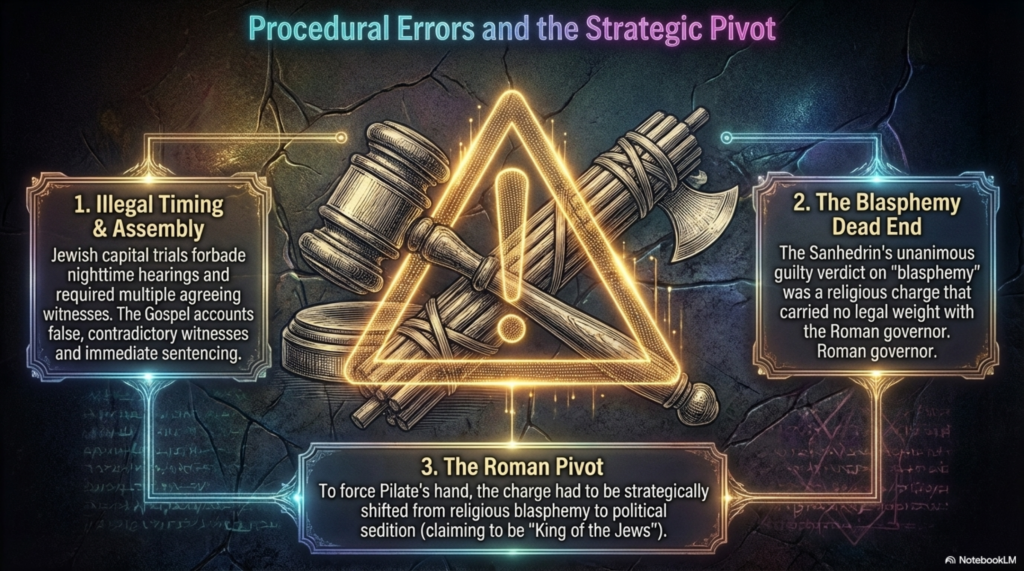
According to the Gospel accounts, Jesus was subjected to a nighttime interrogation and trial before the Sanhedrin, the supreme Jewish judicial body. While tradition highlights the drama of this moment, a historian notes the flagrant procedural irregularities. Jewish law regarding capital punishment was designed with rigorous safeguards: trials were strictly forbidden at night, and a death sentence could never be pronounced on the same day as the proceedings.
However, Vermes argues that these were not mere “errors” in the text, but evidence of a farcical proceeding where the outcome was predetermined. The search for witnesses was less a judicial inquiry and more a performance intended to provide a thin veneer of legitimacy to a decision already reached by the elite. Even more ironic is the role of the High Priest, Caiaphas. In the Gospel of John, Caiaphas is described as “prophesying” that it is better for one man to die for the people than for the nation to perish. To the historian, this is not divine revelation but political expediency—a cynical “human interest” masquerading as divine insight to justify a legal assassination.
“The lack of coherent testimony against Jesus underscores the illegitimacy of the proceedings. The insistence on false witnesses (pseudomartyria) and the eventual condemnation despite the absence of agreement among testimonies reflect a critique of the judicial process and the manipulation of law for political ends.”
——————————————————————————–
3. Takeaway 2: The Political Pivot—From Blasphemy to Sedition
One of the most calculated maneuvers in the Passion narrative is the shifting nature of the charges as Jesus moved from Jewish to Roman custody. Within the Sanhedrin, the primary accusation was religious: blasphemy. Under the Peshat (the literal or surface meaning) of Jewish law, this was a capital offense.
Yet, the Sanhedrin occupied a precarious position. They lacked the ultimate authority to carry out executions under Roman colonial rule for purely religious infractions. Consequently, when they presented Jesus to the Roman governor, Pontius Pilate, they performed a strategic “pivot.” They discarded the charge of blasphemy and presented him as a political rebel. By framing Jesus as the “King of the Jews,” they leveled a charge of sedition—a direct challenge to Roman sovereignty. This “politically palatable accusation” effectively forced Pilate’s hand, transforming a local religious dispute into a capital crime against the Empire, punishable by the Roman method: crucifixion.

——————————————————————————–
4. Takeaway 3: The Strategic “Softening” of Pontius Pilate
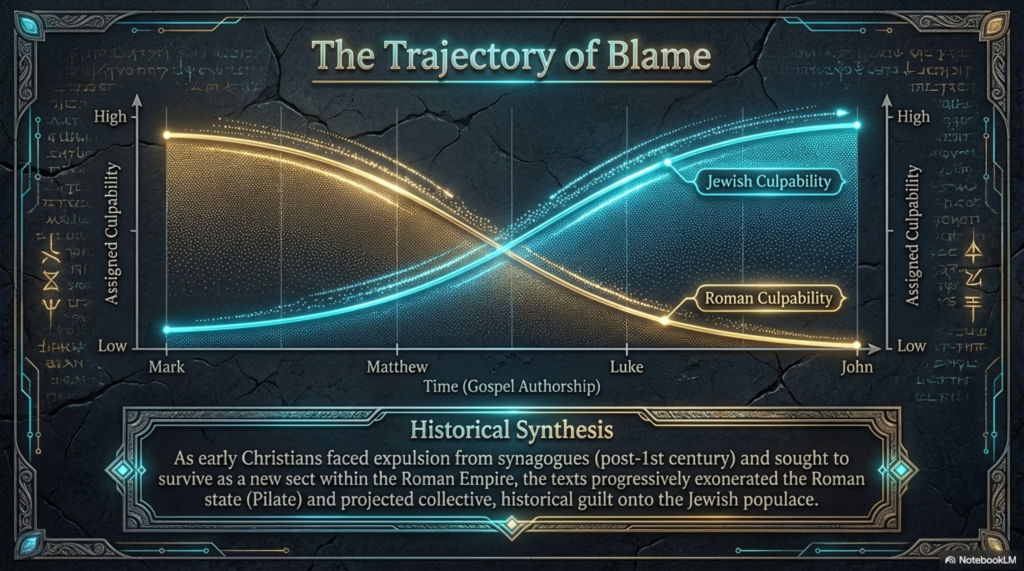
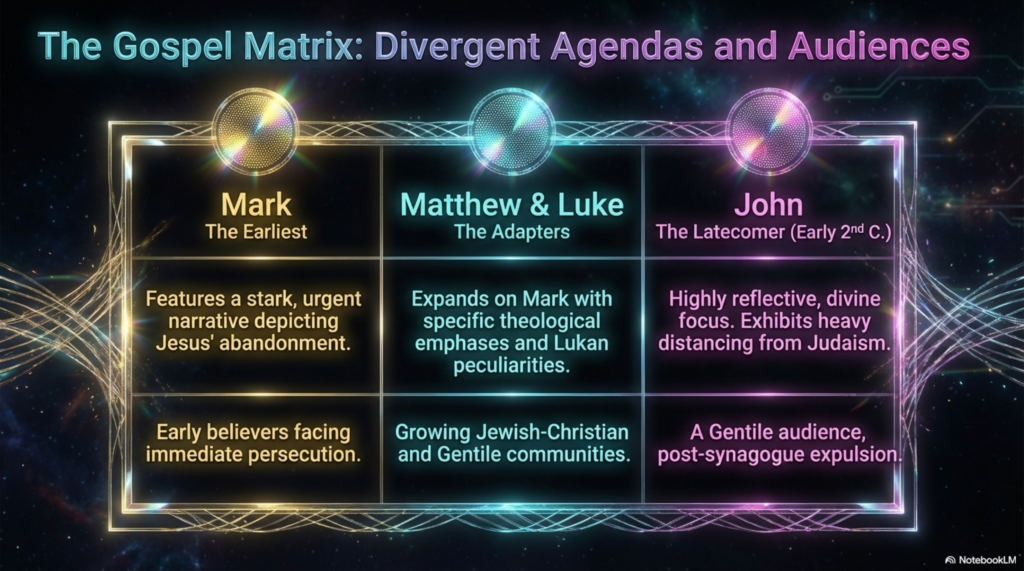
History remembers the real Pontius Pilate as a ruthless, inflexible Roman prefect. Yet, if we examine the Gospels in the chronological order of their composition, we witness a curious literary evolution: Pilate becomes increasingly sympathetic and hesitant.
In the later accounts, Pilate is depicted as a man who “washes his hands” of the affair, appearing more as a victim of Jewish pressure than a willing executioner. This portrayal was a deliberate strategic choice. Writing in the decades following the Jewish Revolt against Rome (66–70 CE), early Christian communities were desperate to distance themselves from anti-Roman sentiment. By portraying the Roman authority as reluctant and shifting the weight of culpability onto the local Jewish leadership, the evangelists ensured that the burgeoning Christian movement appeared less threatening to the Roman state.
——————————————————————————–
5. Takeaway 4: The “Beloved Disciple” as a Literary Symbol
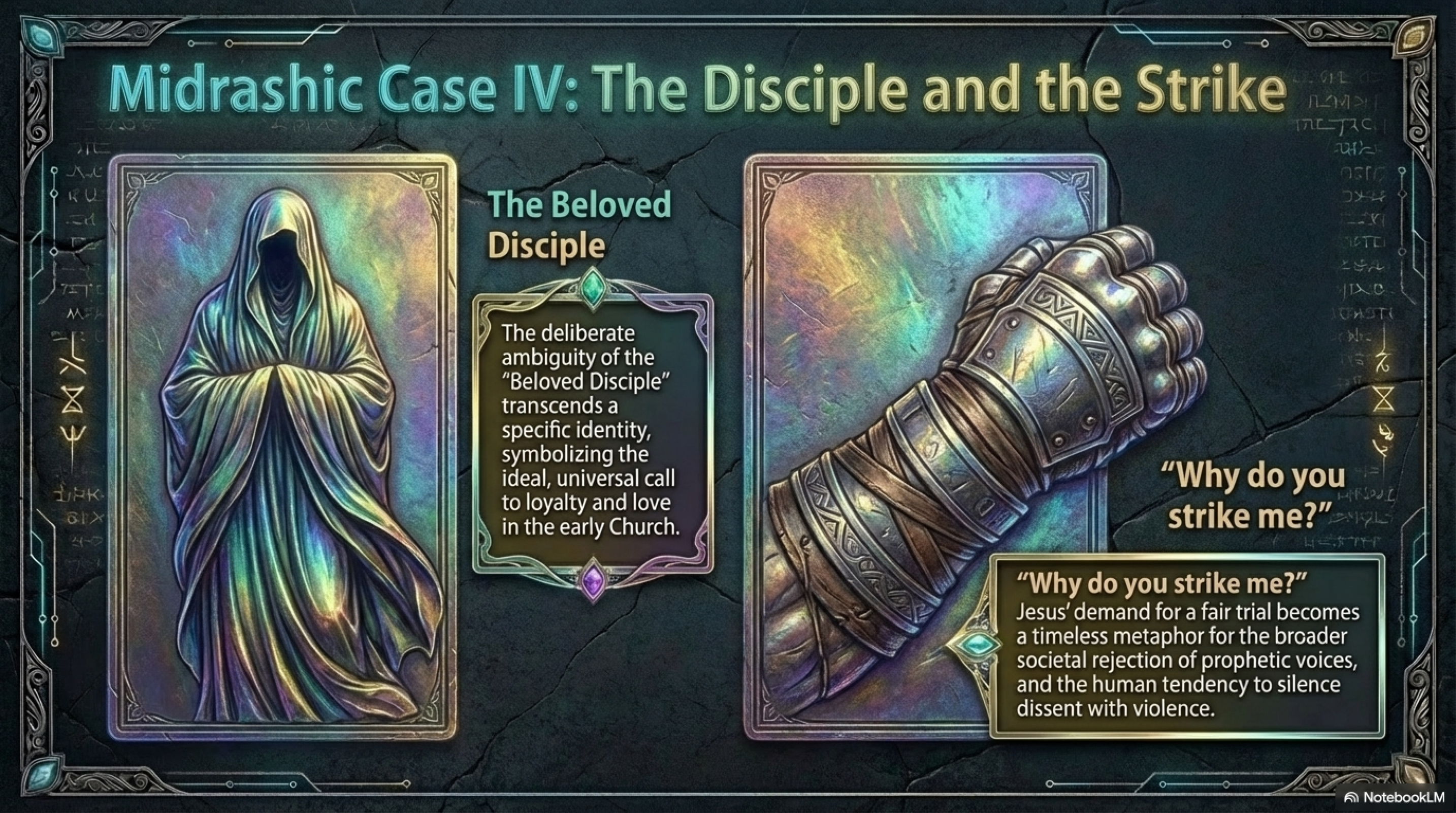
The Gospel of John introduces a mysterious, unnamed figure: the “beloved disciple.” While tradition identifies him as John the Apostle, Vermes notes that solid historical evidence for this is non-existent. To understand this figure, we must move beyond the Peshat and employ a Remez or Derash (deeper, midrashic interpretation).
The beloved disciple is likely not a historical individual at all, but a literary symbol of the “ideal follower.” He represents a midrashic archetype of loyalty and privileged proximity to the divine. By leaving the disciple unnamed, the author invites every reader to inhabit the role. This suggests that the fourth Gospel was less concerned with precise biographical records and more with the spiritual dimensions of discipleship, creating a figure that transcends specific historical identity to offer a universal call to intimacy with the divine.
——————————————————————————–
6. Takeaway 5: The Myth of the Monolithic “Crowd”
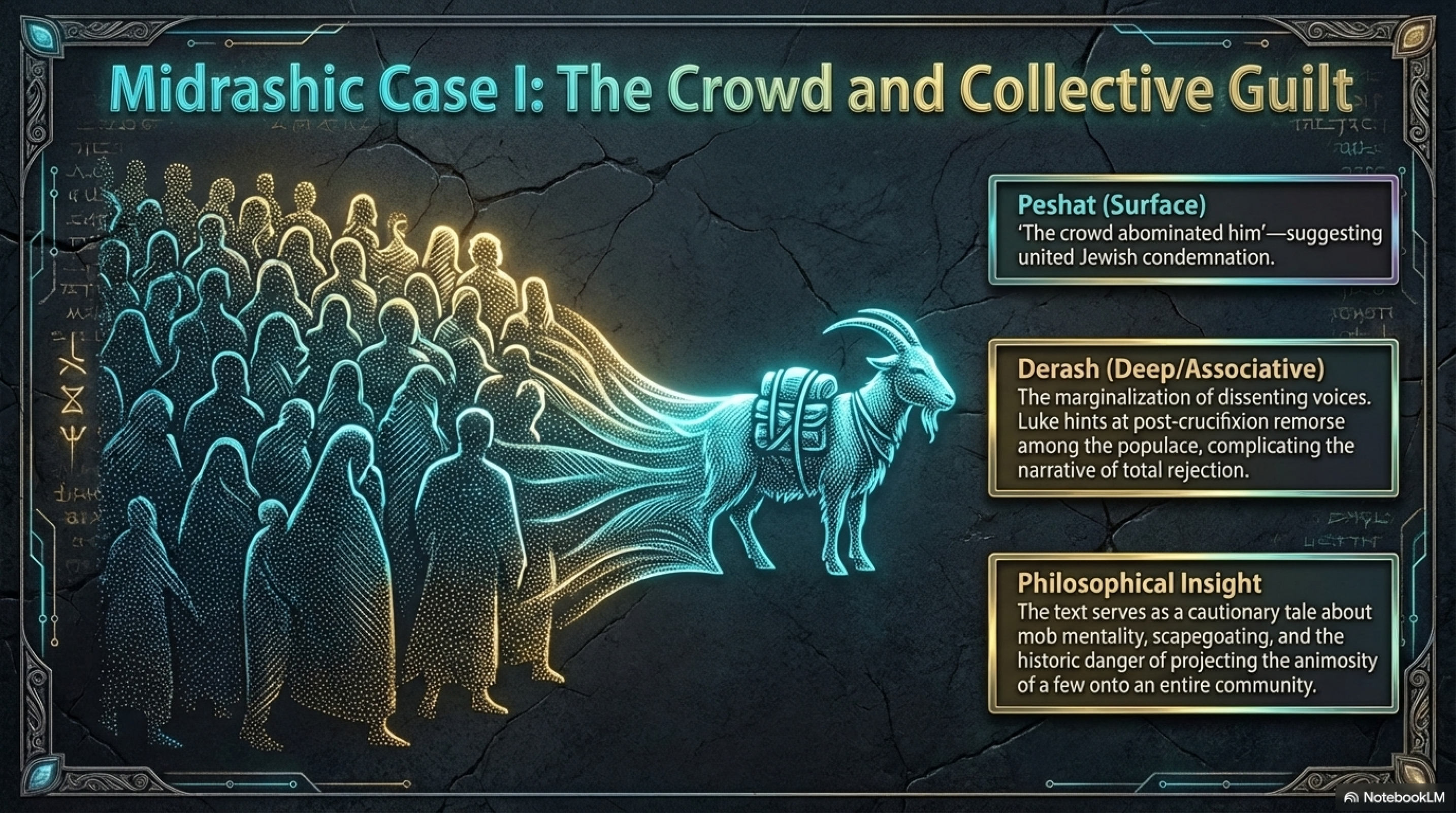
The image of a unified Jewish “crowd” shouting for blood has been used for centuries to justify the horrific concept of collective guilt. However, Vermes reveals this “monolithic crowd” to be a retrospective literary device. The phrase “the crowd abominated him” in some texts is a “strategic ambiguity” used by evangelists who were increasingly addressing a Gentile audience.
When we look closer, the narrative is actually one of deep division. In the Gospel of Luke, for instance, we see a crowd showing profound remorse post-crucifixion. The evangelists’ tendency to project the animosity of a specific political faction onto the entire populace served a theological goal: it created a clear boundary between the old faith and the new. In de-mythologizing this, we recognize the “crowd” not as a historical entity, but as a cautionary tale regarding the dangers of mob mentality and the ease with which human narratives are manipulated to create a scapegoat.
“The rejection of Jesus may not have been as universal as portrayed. The strategic ambiguity of ‘the crowd’ can be seen as a literary device to evoke a sense of collective guilt… a cautionary tale about the dangers of mob mentality and the need for individual moral discernment.”
——————————————————————————–
7. Conclusion: The Historical Jesus vs. The Theological Christ
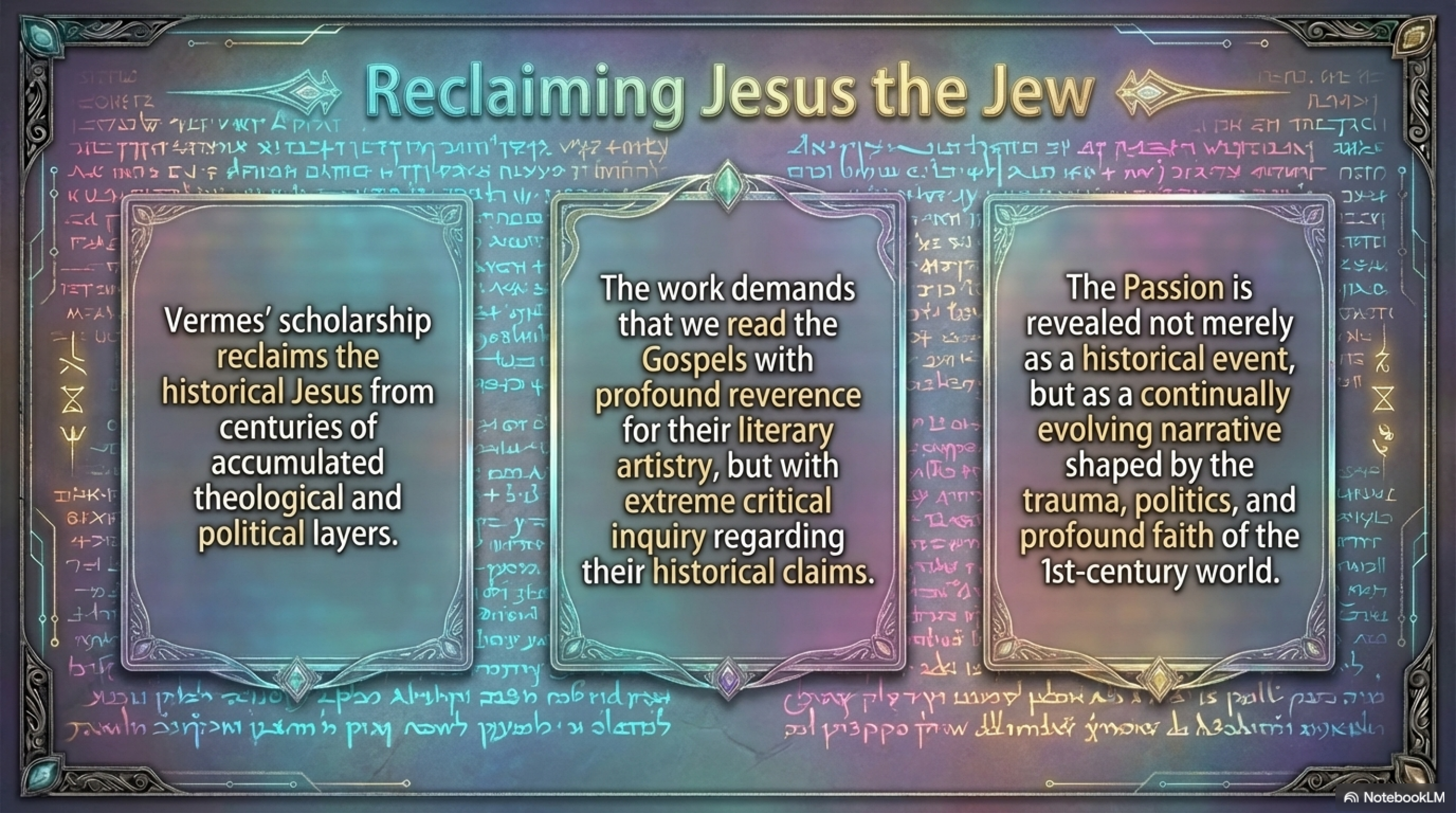
Engaging with the Gospels as historical documents does not strip them of their power; it restores the stakes of the story. By analyzing the Passion through the lens of first-century Judean law and Roman power dynamics, we move past the sanitized “Theological Christ” to encounter the “Historical Jesus”—a figure of profound division caught in a lethal web of institutional fear and colonial survival.
When we peel back the layers of later theological evolution and see the human machinations at play, we are left with a sobering realization. The death of Jesus was not merely a divine plan unfolding on a stage; it was the tragic byproduct of political expediency and the fragile, often violent dynamics of an occupied nation. The question then remains: If the Passion was the result of very human decisions made in a climate of fear, how does that change our own responsibility to speak truth to power in the present?

About the Author