via IFTTT
The Eloquence of Empty Space: 5 Counter-Intuitive Lessons from the Philosophy of Silence
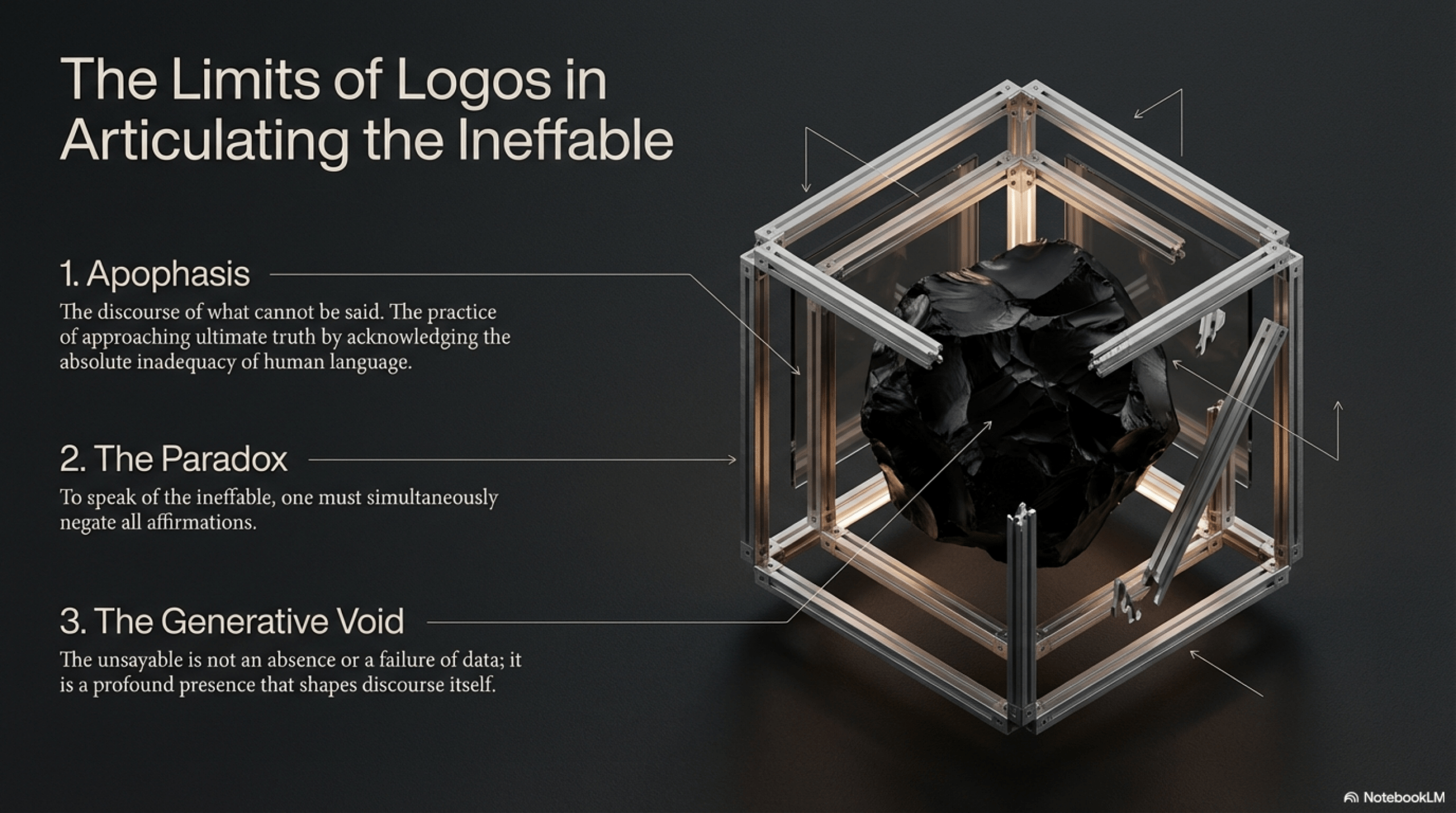
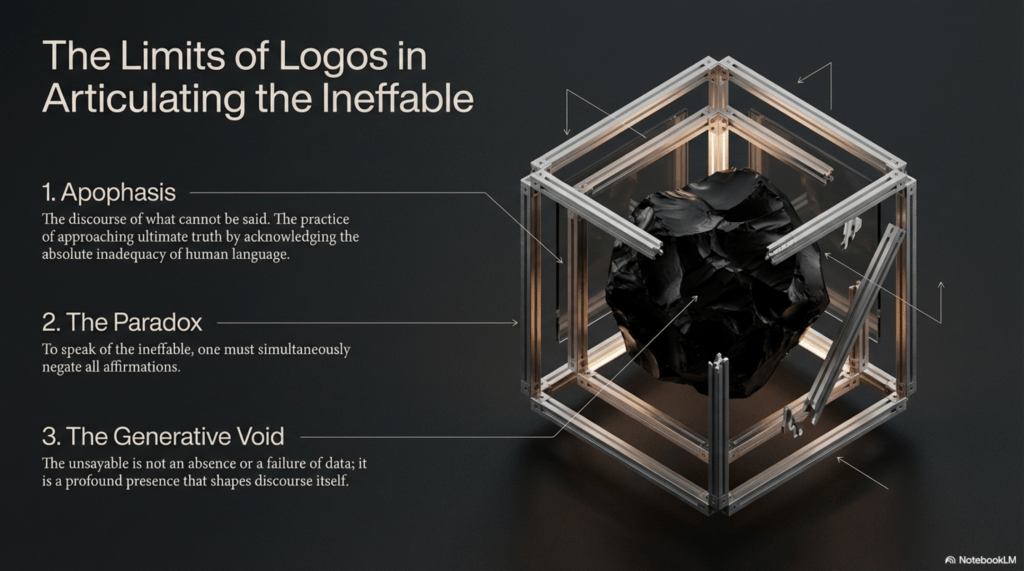
We have all felt the sudden, heavy weight of the unsayable. It arrives in the presence of overwhelming grief, the sharp peak of romantic love, or the quiet tremor of spiritual awe. In these moments, language—usually our most reliable tool—suddenly feels like a blunt instrument. It is too coarse to capture the fine grain of our experience. We call this a “loss for words,” as if we have failed.But what if this failure of language is actually a sophisticated form of insight?In his landmark anthology On What Cannot Be Said , philosopher William Franke explores the tradition of “apophasis,” or negative theology. Rather than viewing the limits of expression as a wall, apophasis treats silence as a revolutionary gateway. It suggests that the most profound truths are not found in what we say, but in the white space surrounding our words.Here are five counter-intuitive lessons from the philosophy of silence that challenge how we perceive reality, language, and one another.
1. Silence is a Presence, Not an Absence
In our modern “noise economy,” we tend to view silence as a void—a mere gap between sounds. However, the apophatic tradition suggests the opposite: the “unsayable” is an active force that gives our speech its shape. Much like the hole in the center of a wheel allows it to turn, the limits of language are intrinsic to expression itself.The unsayable is not just what is left over. It is the “contour” that defines the meaning of what we do manage to articulate. We find this wisdom in the transition from sound to stillness. True understanding requires a psychological pause; the echo must die down before the insight can settle. We do not hear the meaning within the word, but in the hush that follows it.”The full sense of an utterance can be gathered at no point during its articulation but only in the silence afterwards.” — Augustine (Vol 1, Ch 17)
2. The “Missing All”—Defining Reality by What’s Gone
We typically define existence as a collection of facts, objects, and presence. The poet Emily Dickinson, however, turned this standard view on its head through her engagement with “The Missing All.” She proposed a radical paradox: that the totality of existence is defined not by what is there, but by the weight of what is missing.For Dickinson, the “All” is a myth of the visible. The real “All” is a “Missing All.”This negative theology suggests that encountering a void can lead to a more honest understanding of reality than a list of “things” ever could. When we lose something essential, the “Nothing” that remains becomes a source of meaning so vast it dwarfs the “All.” Reality is not just what we can touch. It is the shape of the longing left behind by the infinite.
3. “Learned Ignorance”—The Wisdom of Admitting Defeat
In a culture that prizes “relational knowledge”—the ability to categorize, label, and explain everything—the concept of Docta Ignorantia , or “learned ignorance,” feels almost heretical. Drawn from the thought of Nicholas of Cusa and later echoed by Schelling, this lesson suggests that the highest form of intelligence is recognizing exactly where logic breaks down.Relational Knowledge This is our standard mode of learning. It creates divisions, names parts, and seeks to own the subject through definition. It is useful for navigating the world, but it hits a ceiling when facing the absolute.Transcendent Knowledge This is the “Stupor of Reason.” It is the moment the mind stops trying to “solve” existence and instead admits defeat. Schelling argued that certain truths are “innocent” precisely because they remain unuttered. By admitting the mind’s limits, we move from trying to master a concept to being transformed by a mystery. Truth, in its purest state, is uncorrupted by the coarseness of human articulation.
4. The Translation Trap—It’s Not About the Meaning
We usually assume a good translation is a bridge that carries a specific “sense” from one language to another. But radical thinkers like Franz Rosenzweig and Walter Benjamin argued that this focus on “meaning” is a trap. Sense is a cage; it limits the infinite resonance of a language to a mere message.They suggested that a profound translation should refrain from wanting to communicate. Instead, a translation should be a “gesture” toward a “pure language”—a celestial tongue that exists only in the cracks between human words. If we focus too much on literal sense, we lose the spiritual resonance of the original. Language, at its best, does not point to a definition; it points to the silent, untranslatable essence that exists beyond all human tongues.
5. The Ethical Weight of the Unspoken “Other”
Perhaps the most practical lesson of apophasis lies in our relationships. Philosophers like Emmanuel Levinas, Maurice Blanchot, and Jacques Derrida argued that the most important part of another person is the part we cannot understand or articulate.In a world that demands “transparency,” we often try to fully “know” our partners. But to truly love someone is to respect their fundamental mystery. To name someone fully is to limit them—Derrida spoke of the “aporias” or the impossible knots in naming the Other. We must recognize that any attempt to define another person is a form of reduction. Ethics begins when we realize our responsibility to the other is a debt that can never be fully settled.”The debt increases in the measure that it is paid.” — Maurice Blanchot (Vol 2, Ch 31)
Conclusion: Beyond the Last Word
In a hyper-connected, relentlessly noisy world, the apophatic tradition offers a necessary sanctuary. It reminds us that embracing the mystery of existence isn’t a failure of intelligence; it is intelligence reaching its highest form. When we stop trying to fill every silence with an explanation, we allow the world to speak to us in its own, unutterable language.If we are always talking, we are only repeating what we already know. It is only in the empty space that something truly new—something innocent and transformative—can emerge.”Whereof one cannot speak, thereof one must be silent.” — Ludwig Wittgenstein (Vol 2, Ch 13)If the most important truths cannot be spoken, what are we currently drowning out with our noise?
About the Author